
Church live streaming and video systems
A stream that feels like being in the room, cameras that stay out of the way, and a booth one volunteer can run. Churchfront designs and installs church video and live streaming systems across the country, from the camera to the encoder.
The usual way
A camera on a tripod, and a stream nobody finishes
For many people, the livestream is their first visit to your church. Most church streams are built by adding pieces to the sanctuary system one at a time, and it shows in the picture, the sound and the number of people who stay to the end.
- The stream uses the house mix, so it sounds thin and the room disappears
- Faces are dark or blown out because the lighting was set for the room
- The LED wall flickers or bands on camera
- One wide shot for the whole service, because nobody can run more
- The stream drops or stalls on the Sundays it matters most
- Only one volunteer knows how to start it

Why Churchfront
The stream is its own service
A separate mix for the people at home
People at home hear through laptop speakers and earbuds, not a PA. We design a dedicated broadcast mix, and capture the congregation singing so the stream feels like a room full of people.
Cameras placed for the service
Camera positions, lenses and PTZ presets are planned from your platform, your sightlines and how your pastor moves, so every shot is ready before it is needed.
Lighting and video designed together
The camera needs different light than the eye. We design lighting, the LED wall and the cameras as one system, so faces look right and screens do not flicker.
Built for a volunteer team
Presets, simple switching and one-button start-up mean a volunteer can run a multi-camera service. We teach church video every week on our own channel, and it shows in how we lay out a booth.
What we design and install
From the camera
to the encoder.
A church video system covers everything the congregation sees in the room and everything people see at home. We design the whole chain so each part supports the others.
Cameras
The right number of cameras in the right places, with presets that make every shot repeatable.
PTZ and manned cameras. Lens selection from throw distance. Mounts and enclosures that disappear into the room.
Switching and production
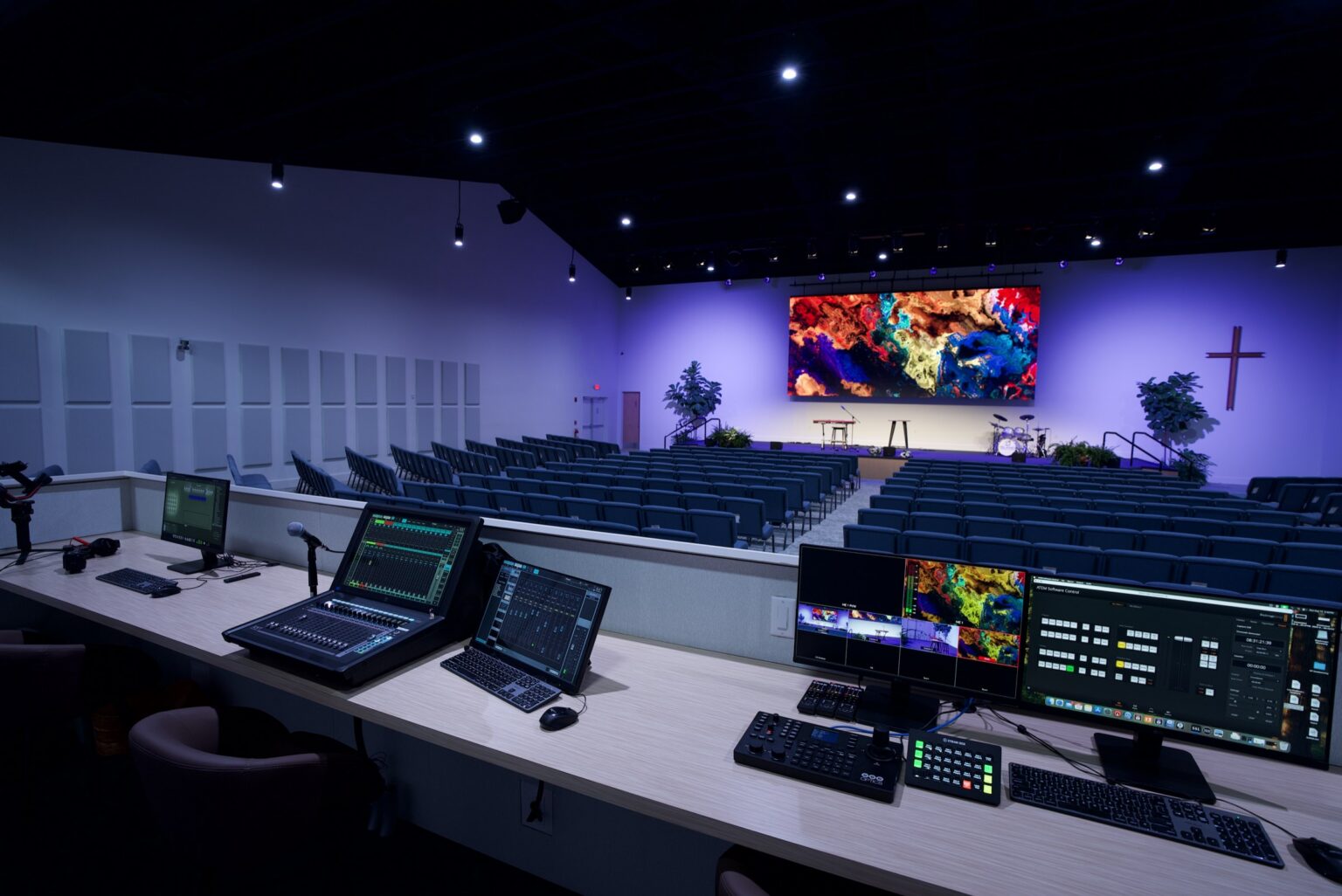
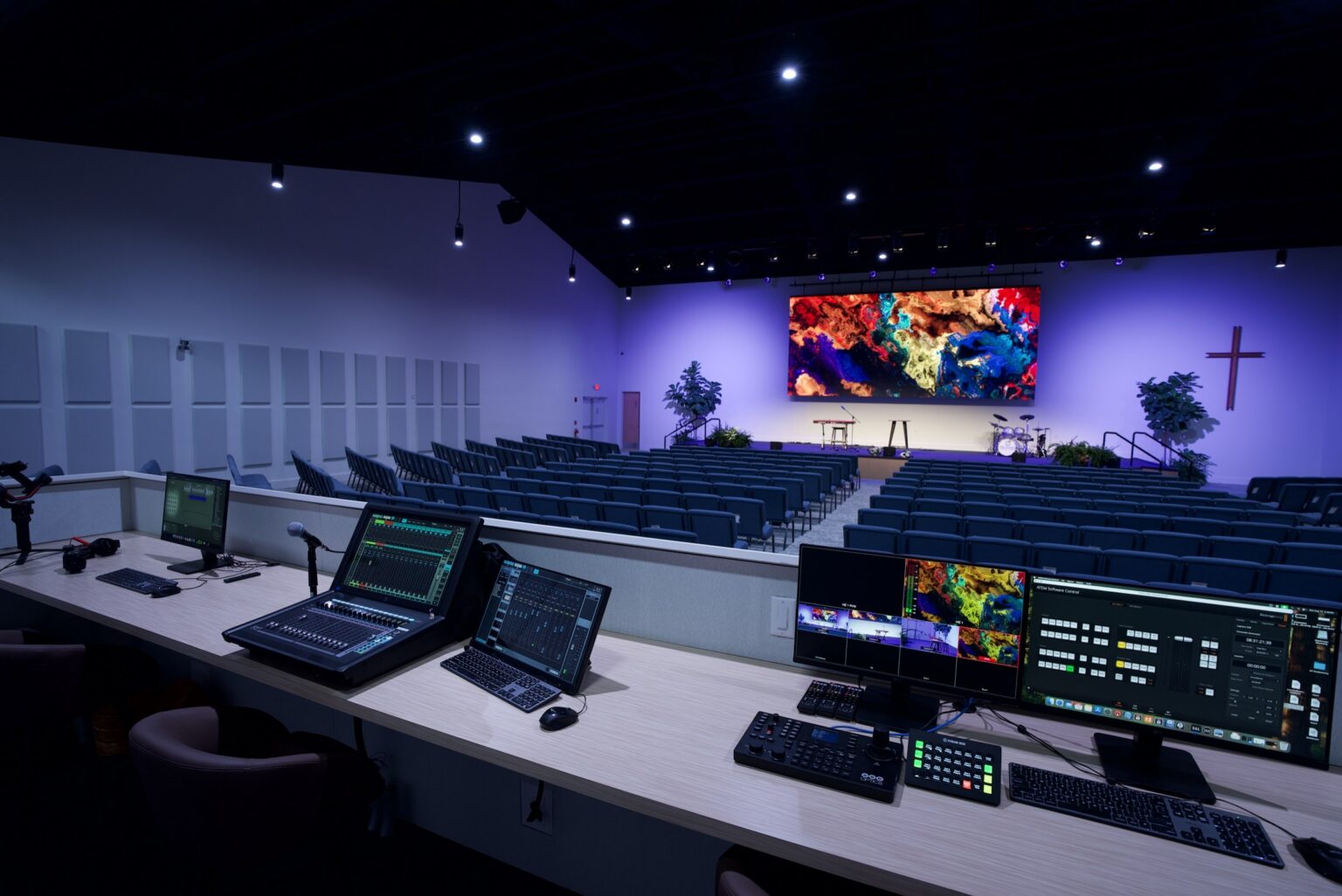
A production switcher and multiview laid out so one volunteer can cut a service confidently.
Production switchers and control panels. Multiview and confidence monitoring. Stream Deck and macro control.
Broadcast audio
A mix built for headphones and phone speakers, with the room in it.
Dedicated broadcast mix. Congregation and ambience microphones. Audio and video sync.
Encoding and streaming
Reliable encoding and delivery to the platforms your church uses, with a backup plan for the Sundays that count.
Hardware and software encoders. Streaming platform integration. Network planning and recording.
IMAG and in-room video
Camera shots on the screens in the room, timed and framed so the people in the back rows feel close.
IMAG routing to LED walls and projection. ProPresenter integration. Video distribution across the building.
Booth and infrastructure
A booth that is comfortable to work in, and cabling that can grow with your ministry.
Booth layout and furniture. KVMs and computers. Video cabling, networking and power.
How a church video project runs
Designed around your service, then built
Your service and your team
How your service flows, who watches online, where they watch, and how many volunteers you actually have on a Sunday.
Camera plan and signal flow
Camera positions and shots are planned in a model of your room, with a signal schematic that names every device, port and cable.
Engineer and price
Cameras, switching, audio, encoding and infrastructure, engineered and documented. The phase ends with one price for the design as engineered.
Install and commission
Our own crews install and test every signal path, set camera presets and exposure, and run test streams before your first service.
Train the people who run it
Your volunteers learn to start, run and shut down the system, with documentation to return to and support while they settle in.
The work
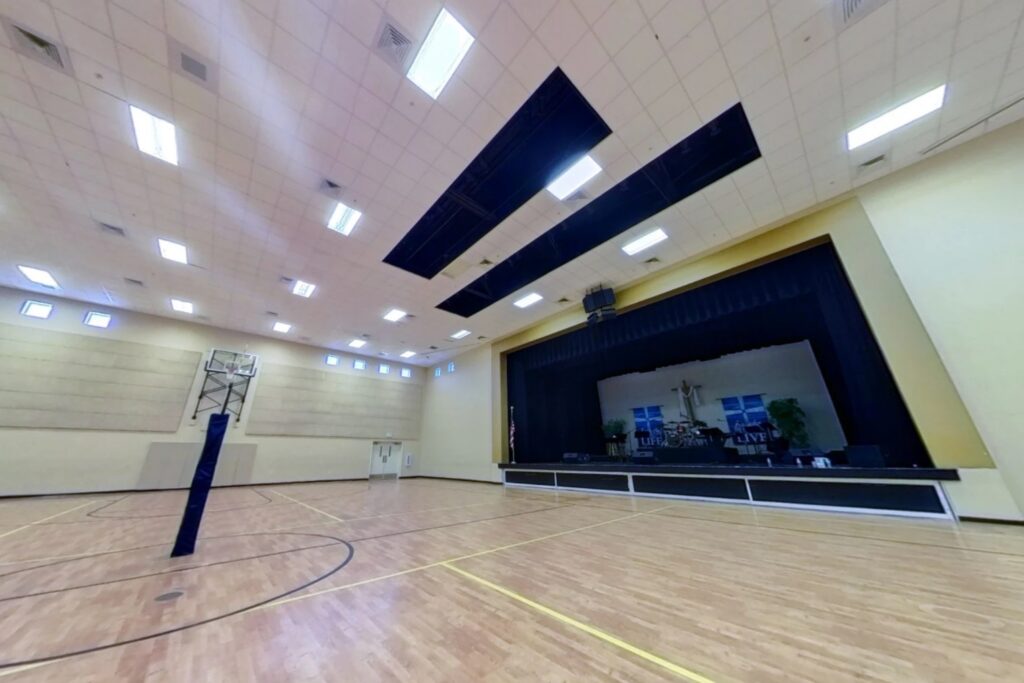
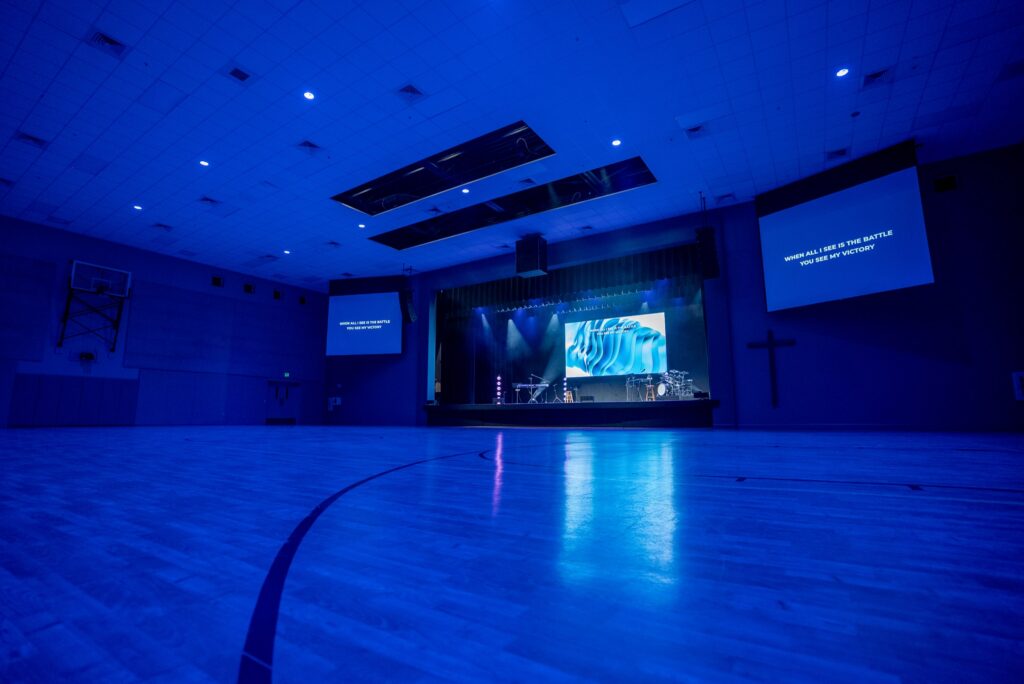
Cameras that disappear when the gym comes back
Palm City Presbyterian worships in a family life center that hosts volleyball and basketball all week. Its four PTZ cameras sit on a shelf that lifts into a protective box in the ceiling when the room goes back to being a gym.
Across campus, the traditional sanctuary got white cameras chosen to blend into the room. Most of the congregation still has not noticed them.
More projects
Church video systems we have built
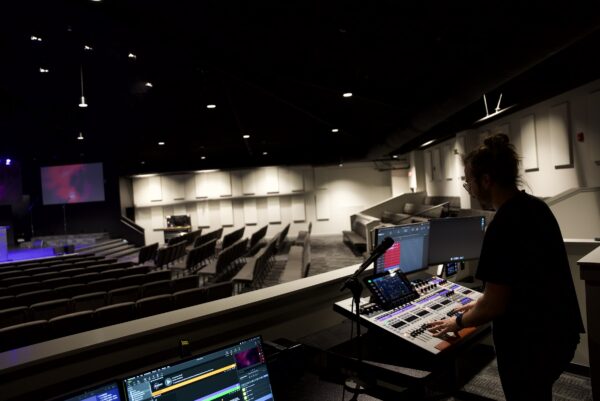
Faith Covenant Church of God
Four PTZ cameras into a production switcher, with the stream handled by BoxCast. Standing desks, KVMs and a Stream Deck across video and lighting.
Scottsboro, Alabama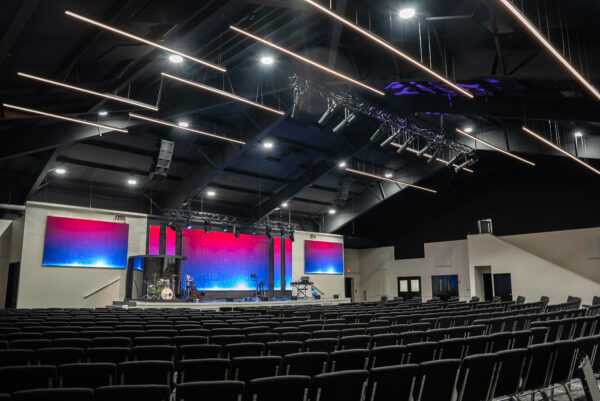
First Baptist Church Pontotoc
Two discreet hanging microphones capture the congregation singing, because a broadcast without the room in it sounds like an empty building.
Pontotoc, Mississippi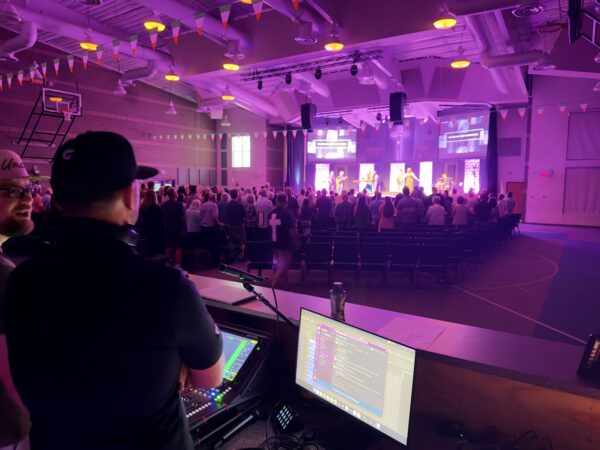
North Metro Church
KVMs and dedicated computers at front of house, plus a support machine our team can reach remotely without touching a volunteer's workstation mid-service.
ColoradoCommon questions
Church live streaming questions
What equipment is needed to live stream a church service?
At minimum: at least one camera, a way to switch or record the picture, a dedicated audio feed, an encoder and a reliable internet connection. Most churches get the biggest improvement from a proper broadcast audio mix and good front light, before adding cameras. We design the system around your service and your volunteer team.
How much does a church live streaming system cost?
It ranges from a simple one-camera setup to a multi-camera broadcast system, and the room, the lighting and your infrastructure matter as much as the equipment. Pre-design ends with a Program Report that gives you budget ranges to take to your board. The fixed price comes after engineering.
What is the best encoder for church live streaming?
The best encoder is the one that fits the rest of your system and that your volunteers can run reliably. We tested several side by side in our encoder comparison. In a full system design, we choose it alongside your switcher, network and streaming platform.
Why does our livestream audio sound bad?
Usually because the stream is fed from the house mix. A mix built for a room full of speakers sounds thin through earbuds, and the congregation singing disappears. A dedicated broadcast mix with ambience microphones fixes most of it.
How many cameras does a church need to live stream?
One well-placed camera can serve a small church. Two or three cameras with presets give you a wide shot, a speaker shot and a worship shot, which is enough for most services. More cameras only help if your team can run them.
Can volunteers run a multi-camera livestream?
Yes, if the system is designed for them. PTZ presets, a simple switcher layout and one-button start-up mean one or two volunteers can run a multi-camera service. We train your team on your system before we hand it over.
Do you install church video systems outside Florida?
Yes. We are headquartered in Melbourne, Florida and work nationally. Our own crews travel for installation and commissioning, and travel is scoped and priced in the proposal.
Let’s talk about your stream.
Tell us how your church streams today and who you are trying to reach. We will tell you honestly what will make the biggest difference first.