
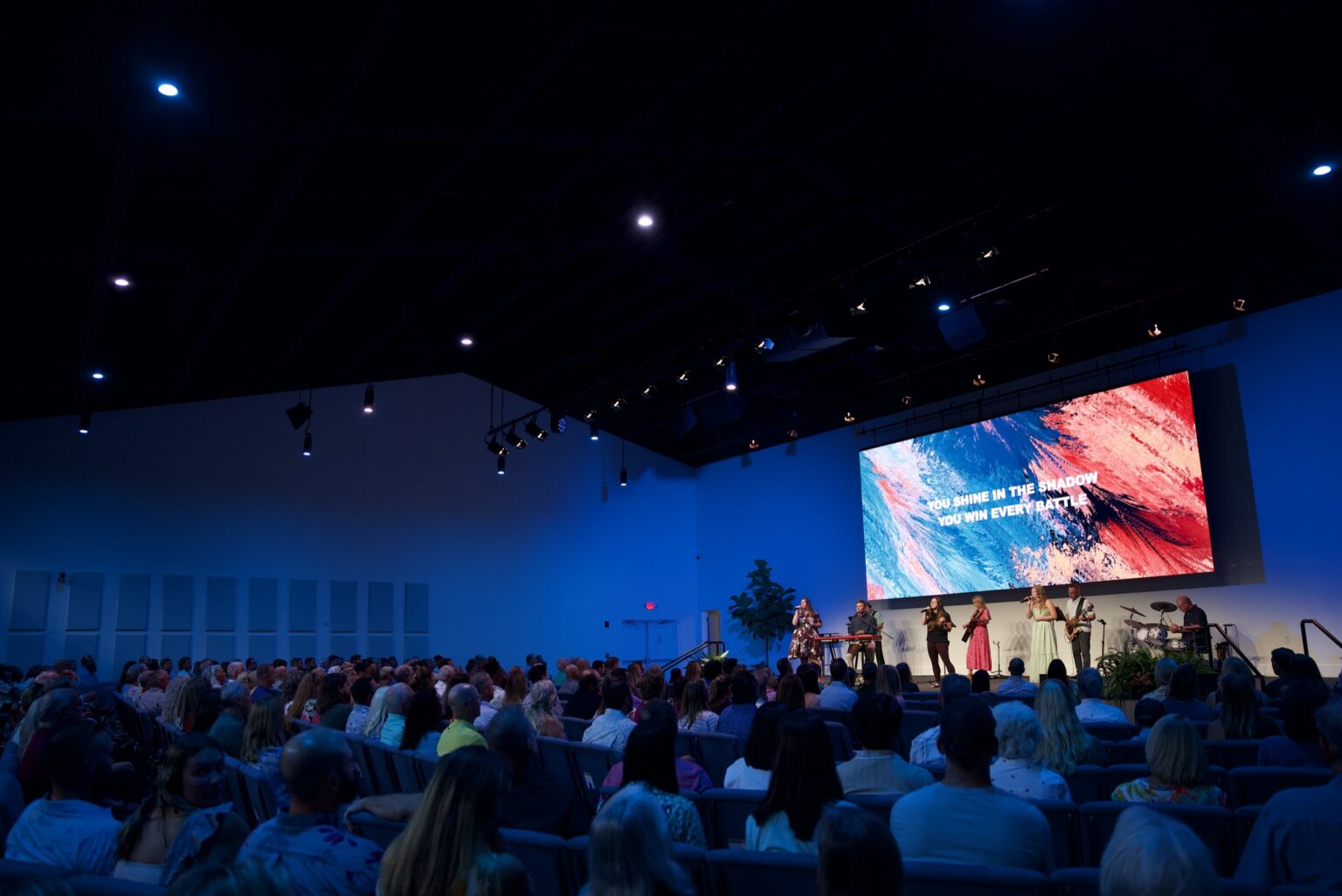
Church sound system design and installation
Every word from the pulpit understood in every seat, and a worship mix your volunteers can run with confidence. Churchfront designs, installs and tunes sound systems for churches across the country, engineered for your room and delivered by one team.
The usual way
More speakers, and the room still wins
Most church sound problems are not a volume problem. They come from coverage, reflections, stage volume and a system assembled one purchase at a time. Adding power to a room that smears speech only makes the smear louder.
- The sermon is loud enough in the back rows but hard to understand
- The front rows get blasted while the balcony sounds thin
- Stage volume from wedges and amps fights the house mix
- Lapel and headset mics feed back before they are loud enough
- The mix changes every week depending on who is running it
- The livestream sounds nothing like the room

Why Churchfront
Engineered for the room, built for Sunday
Coverage is modeled before anything is ordered
We predict how the system will perform in your actual room, seat by seat, before a single speaker is purchased. You approve a design that has already been proven on paper, not a product list and a promise.
Church audio is all we do
We design and install worship systems for churches only. That focus is why our designs account for a spoken sermon, a full band and a volunteer at the console in the same service.
CTS-certified engineers with ministry backgrounds
Every member of the team has ministry experience or formal theological training. We hold AVIXA CTS certification, and we have mixed a Sunday service ourselves.
One team from design to the first service
The people who engineer your sound system pre-build the racks, install it, tune it and train your volunteers. One contract and one project manager, with no handoff where accountability gets lost.
What we design and install
The whole signal chain,
engineered as one system.
A church sound system runs from the microphone on the platform to the ear in the last row, and to the headphones of someone watching at home. We design every link in that chain together, because a weak link anywhere is what the congregation hears.
Loudspeaker systems
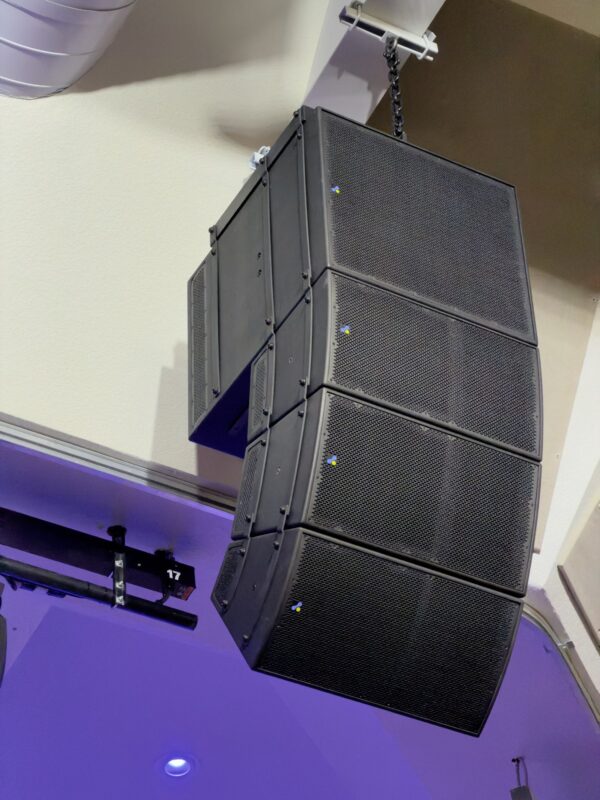
The right format for your room, aimed where the people are and away from the walls and ceiling that cause reflections.
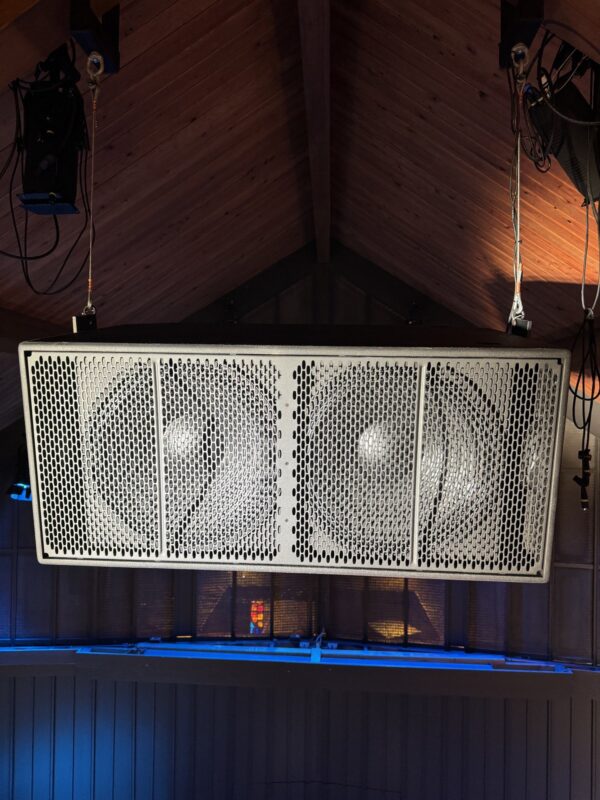
Line array, point source and distributed designs. Subwoofer arrays with directional control. Front fill, delay and balcony zones.
Mixing consoles and stage I/O
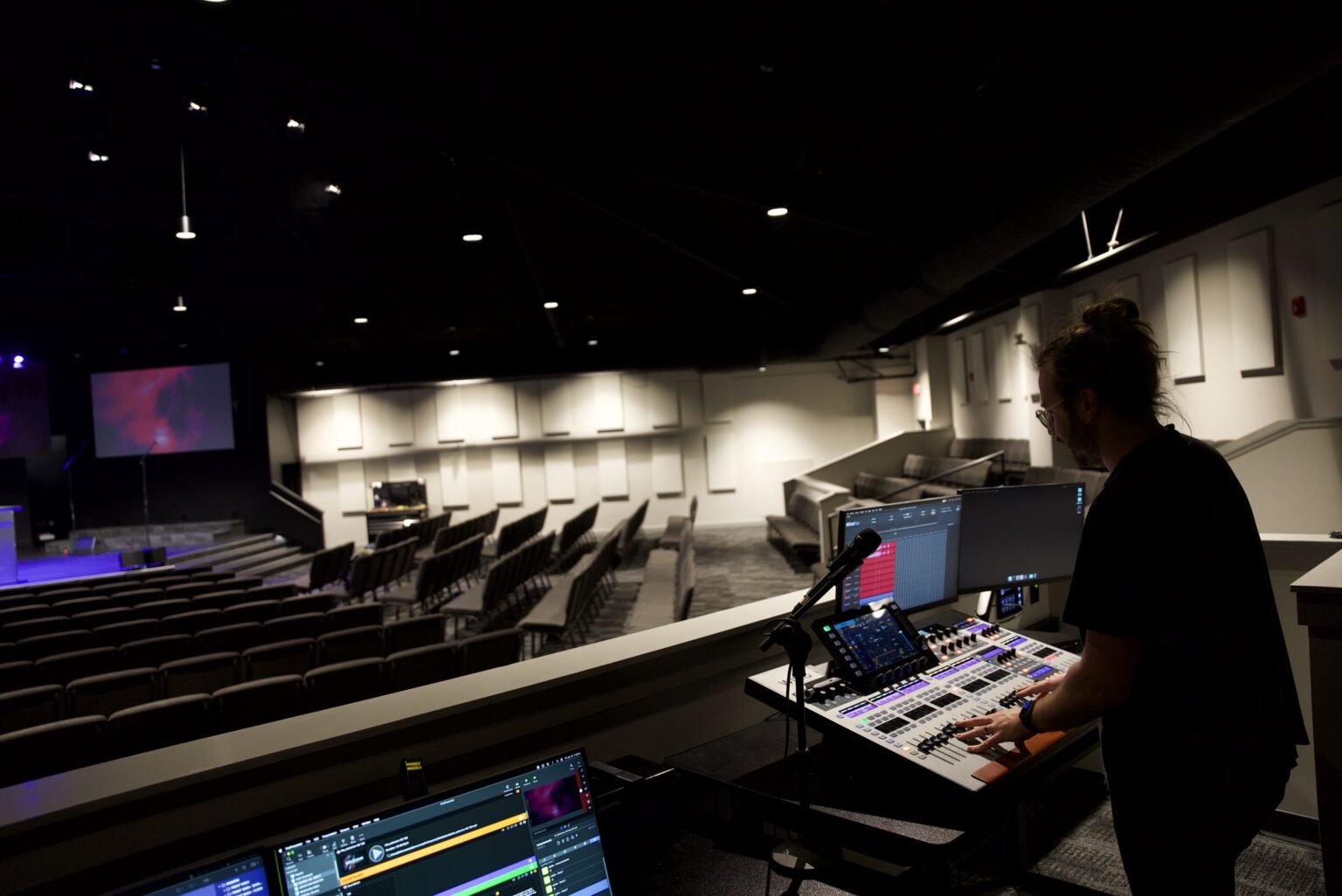
A console layout your volunteers can learn, with scenes and presets that make a good mix repeatable from one week to the next.
Digital consoles and stage boxes. Snapshot and scene design. Front-of-house and monitor positions laid out for the operator.
Monitoring and stage volume
A quieter stage is the fastest way to a clearer house mix. We design monitoring that gives musicians what they need without flooding the room.
In-ear monitor systems and personal monitor mixers. Wedge and side-fill design where they still fit. Drum and amp isolation.
Wireless microphones and RF
Headset, lapel and handheld mics that stay clean for the whole sermon, coordinated so they do not interfere with each other or with in-ear packs.
Wireless microphone and IEM systems. RF coordination and antenna distribution. Charging and storage workflows for volunteer teams.
Processing, tuning and networking
Tuning is where a well-designed system becomes a great-sounding one. Every system is measured and tuned in the room before we hand it over.
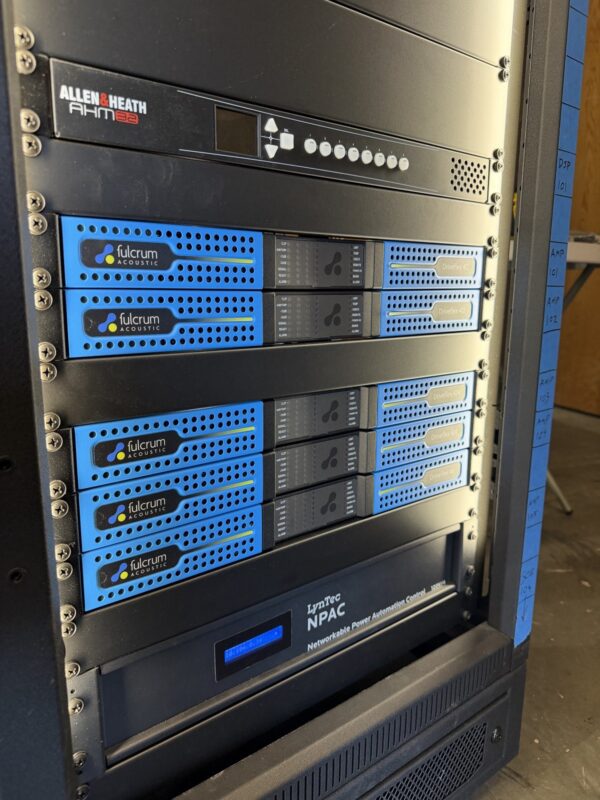
DSP and loudspeaker processing. Measurement-based system tuning. Dante audio networking. Amplification and clean power.
Broadcast mix and assistive listening
An online service needs its own mix. We design it as a separate deliverable instead of tapping the house mix and hoping it translates.
Dedicated broadcast mixes and recording. Streaming audio integration. ADA assistive listening systems.
How we design a church sound system
Measured, modeled, then built
Listen to your ministry
Worship style, service flow, how much of the sermon is spoken versus sung, who runs the console and how often. The system is designed around how your church actually worships.
Evaluate the room
Room geometry, reverberation, HVAC noise, rigging capacity, power and existing infrastructure. We also tell you what equipment you own is worth keeping.
Model coverage and intelligibility
Acoustic predictions show how evenly the system covers every seat and how clearly speech will come through, before anything is bought. Where the room itself is the problem, we recommend acoustic treatment rather than more speakers.
Engineer and price the system
Speaker positions, rigging, signal flow and rack layouts, documented in full. The phase ends with one price covering equipment, materials and installation for the design as engineered.
Install, tune and commission
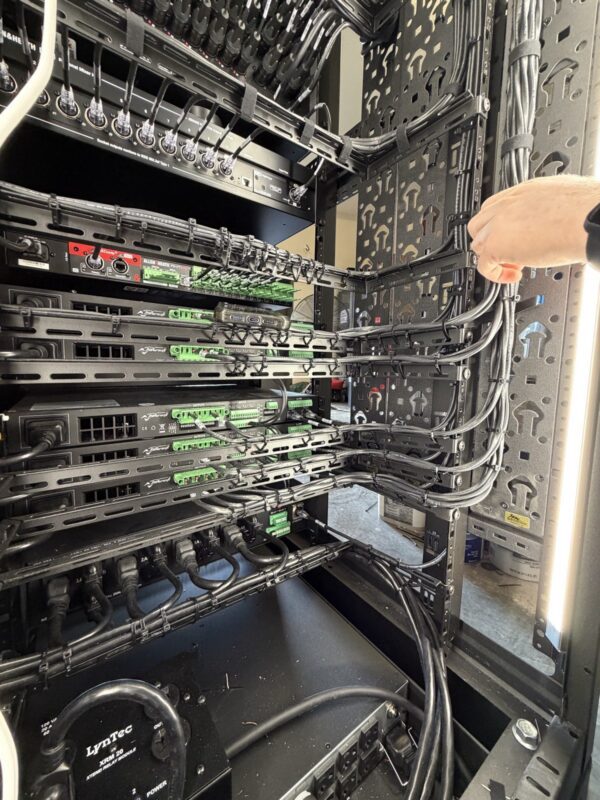
Racks are pre-built and tested before they ship. Our own crews hang, cable and terminate the system, verify every signal path and tune it with measurement in your room.
Train the people who run it
The project is finished when your volunteers can run a Sunday confidently and you hold as-built documentation. A system nobody can operate has not been delivered.
Every room is different
The right system depends on the room
Modern auditoriums
Wide, deep rooms with a full band often call for a flown line array and directional subwoofers, so the energy lands on the seats and stays off the platform.
Traditional sanctuaries
Long reverberation and architecture that cannot change. Careful point source or column designs keep speech clear while the system stays out of sight.
Gymnatoriums and multipurpose rooms
Hard, parallel surfaces and high ceilings. These rooms need acoustic treatment and tight pattern control far more than they need bigger speakers.
The people at the console
Designed for the volunteer on a thin Sunday
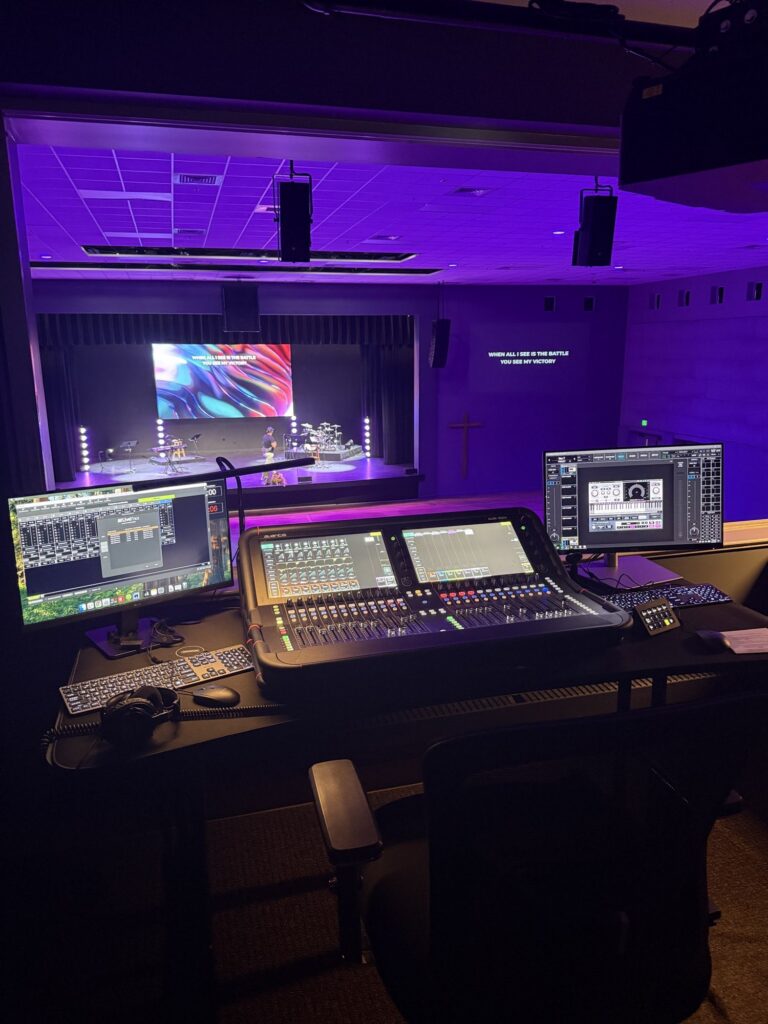
Most churches run sound with volunteers, and many weeks it is one person. A good design makes that person successful: a console that starts from a known-good scene, a stage that is quiet enough to mix, and wireless that just works.
- Console scenes and presets built for your services
- Hands-on training on your system, in your room
- Documentation your team can return to
- Support after handover while the team settles in
Learn before you buy
Free guides from our team
We teach church audio every week on YouTube and the Churchfront Show. These are a good place to start if you are planning a new system.
Common questions
Church sound system questions
How much does a church sound system cost?
It depends on the room far more than the size of the church. Room shape, acoustics, seat count and existing infrastructure move the number more than any single piece of equipment. We do not quote a system before we have scoped one. Pre-design ends with a Program Report that gives you preliminary budget ranges, which is the number you take to your board. The fixed price comes after engineering, when it is based on a real design.
Why can people hear the pastor but not understand them?
Loudness and intelligibility are different problems. When speech bounces off walls and ceilings, or when some seats are covered by several speakers at slightly different times, words blur together even at high volume. The fix is usually better coverage, pattern control and sometimes acoustic treatment, not more power.
Does our church need a line array?
Not always. Line arrays suit wide, deep rooms where sound has to travel a long way evenly. Many sanctuaries are better served by point source, column or distributed systems. We choose the format from coverage modeling of your room, not from what is popular.
Can you improve our existing sound system instead of replacing it?
Often, yes. Plenty of equipment has life left in it, and retuning, re-aiming or adding the right piece can make a real difference. We will tell you honestly what is worth keeping, and when working around something will cost more than replacing it.
Should we hire a sound consultant or an installer?
Churchfront is both. You can start with pre-design on its own, get a written scope and budget ranges, and decide from there. If we go on to design and install the system, the people who scoped it are the people who build it, so nothing is lost in a handoff.
How long does a church sound system installation take?
The installation is usually the shortest phase. Design and equipment lead times drive the schedule more than labor does. We track long-lead items from the moment the proposal is signed and schedule the install around your services.
Do you work with churches outside Florida?
Yes. We are headquartered in Melbourne, Florida and work nationally. Our own crews travel for installation and commissioning rather than subcontracting to a local firm, and travel is scoped and priced in the proposal.
Do you train our sound volunteers?
Yes, and the project is not finished until we have. Installation closes out with hands-on volunteer training and as-built documentation in your hands.
Let’s talk about your sound.
Tell us what is working and what is not in your room. We will tell you honestly what it takes to get where you want to be. Every project starts with a conversation, not a quote.