
A church PA system has one job: every word from the pulpit understood in every seat, and a worship mix that sounds full without wearing people out. Most churches that struggle with sound do not have a volume problem. They have a coverage problem, a room problem or a stage volume problem, and a system that was assembled one purchase at a time.
This guide walks through how we plan a church sound system, in the order the decisions should be made. It is written for pastors, tech directors and building committees who want to understand the choices before they spend money.
In this guide
- Start with the ministry, not the speakers
- The room comes before the equipment
- Coverage: sound where the people are
- Choosing a loudspeaker format
- Subwoofers: controlling the low end
- Stage volume is the hidden problem
- Amplification, processing and tuning
- The console and the people who run it
- Don’t forget the stream and assistive listening
- The manufacturers we specify most
- Common mistakes we see
- How to get started
- Church PA system questions
Start with the ministry, not the speakers
Before anyone picks a loudspeaker, answer a few questions about how your church actually worships:
- How much of the service is spoken versus sung? A teaching-heavy service puts speech clarity first.
- How big is the band, and how loud does it play? A full band with drums needs a different system than a piano and a choir.
- Who runs sound, and how often? If it is one volunteer on most Sundays, the system has to make that person successful.
- How much of your ministry happens online? A livestream needs its own mix, and that affects the console and the network.
These answers shape everything that follows. Two churches with the same room can need very different systems.
The room comes before the equipment
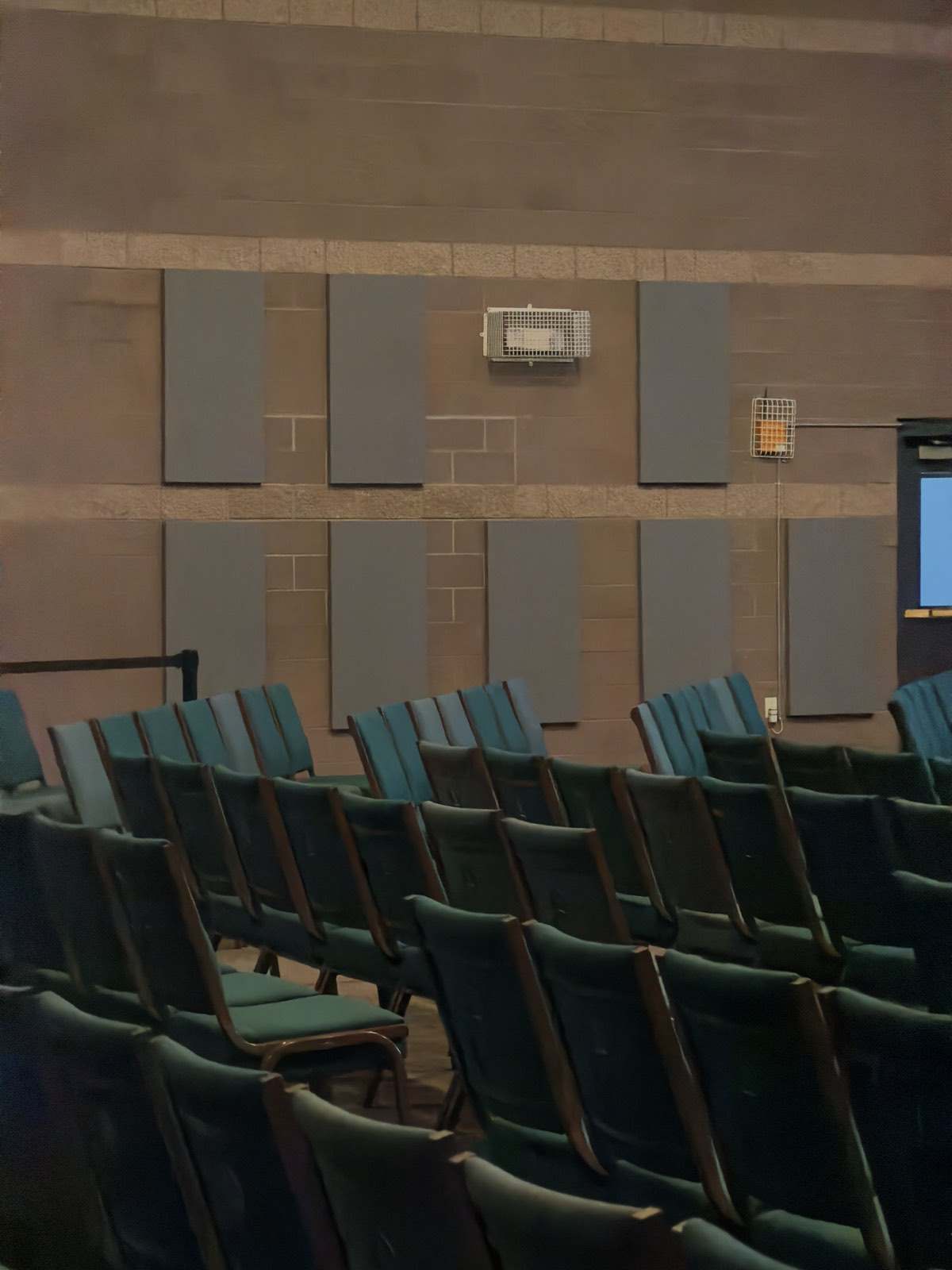
Sound does not stop at the congregation. It bounces off walls, ceilings, glass and floors, and those reflections arrive at your ears a few milliseconds after the direct sound. When there are too many of them, words blur together. The pastor is loud enough in the back row but hard to understand.
No loudspeaker can fix a room that smears speech. Adding power only makes the smear louder. That is why we evaluate the room first: its shape, its hard surfaces, its reverberation, HVAC noise and what the architecture will allow.
Often the answer is acoustic treatment on the right walls, not more speakers. Treatment can be subtle, and it can usually leave architectural features like wood ceilings and stained glass untouched. We often use Primacoustic panels because they perform well and look finished in a sanctuary.
Coverage: sound where the people are
The goal of a PA system is even sound in every seat. The front row should not get blasted while the balcony sounds thin, and no seat should hear two speakers arriving at slightly different times.
Good coverage comes from aiming the right kind of loudspeaker at the audience and away from the walls and ceiling. Professional designers model this in acoustic prediction software before anything is ordered. The model shows how loud and how clear the system will be, seat by seat, and it catches problems while they are still cheap to fix.
If an integrator hands you a speaker list without a coverage model, ask for one. It is the difference between a design and a guess.
Choosing a loudspeaker format
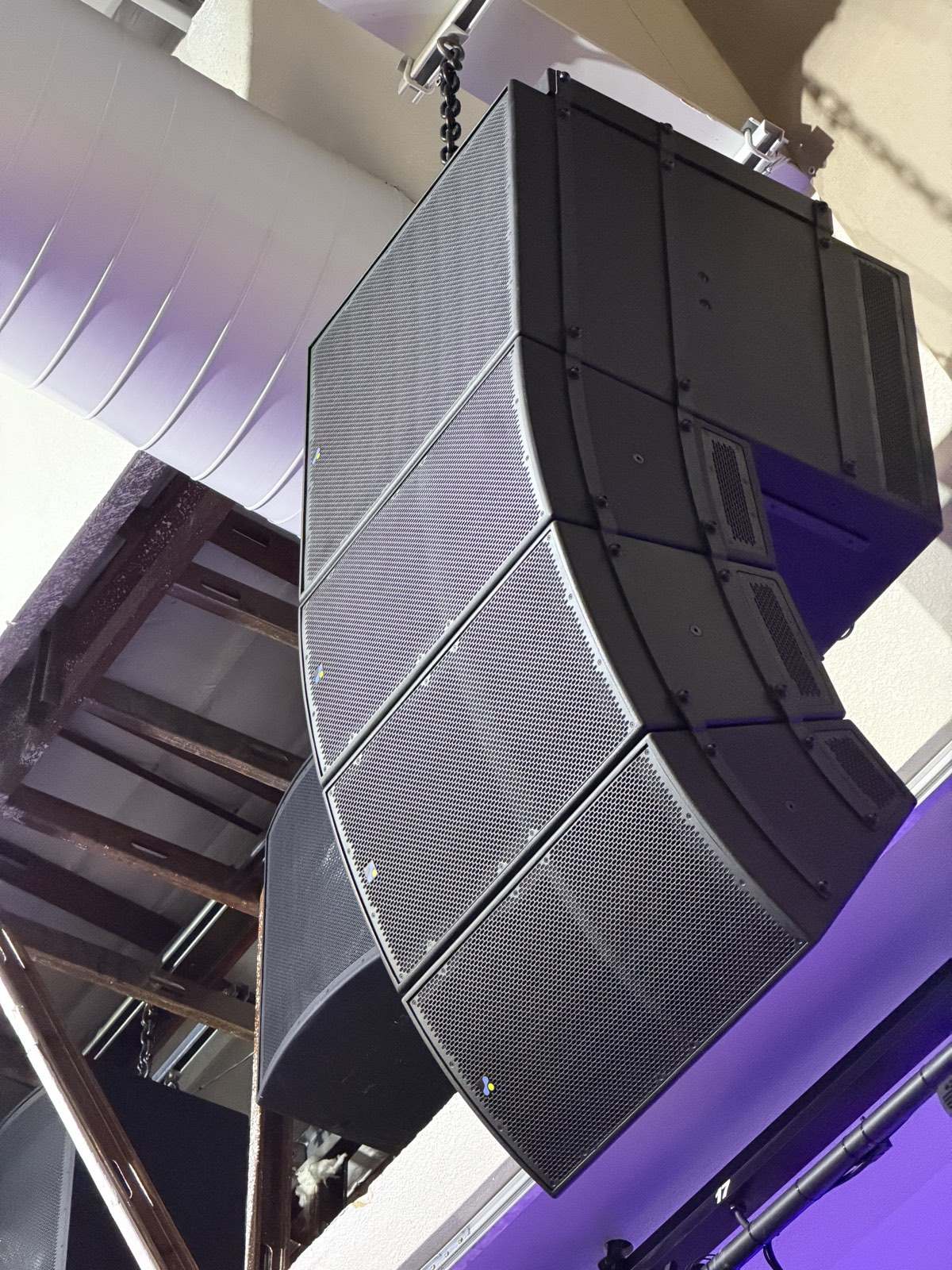
There is no single best speaker for churches. The right format depends on the room.
Line arrays
Line arrays suit wide, deep rooms where sound has to travel a long way evenly. They are powerful and precise, but they are not automatically the right answer. A line array in a small room is often more cost and more hardware than the space needs.
Point source
Point source speakers work well in small and mid-size rooms. Modern designs, including coaxial models that place the high-frequency driver in the center of the woofer, deliver clear, consistent sound from a compact box. For many sanctuaries this is the most practical choice.
Column and distributed systems
Traditional sanctuaries with long reverberation often do best with steerable columns or a distributed system of smaller speakers. These keep speech clear and stay visually quiet in rooms where the architecture matters.
Fills and delays
Almost every room needs help somewhere. Front fills cover the first rows under the main speakers. Delay speakers cover balconies and the back of long rooms. They are time-aligned so the congregation hears one source, not an echo.
Subwoofers: controlling the low end
Low frequencies spread in every direction, which is why a subwoofer on the floor often sounds as loud on stage as it does in the room. That low end muddies the stage and makes the band turn up.
Directional, or cardioid, subwoofer arrays push low end toward the congregation and cancel much of it behind the array. Whether subs are flown or ground stacked depends on the room, the look you want and how physical you want the low end to feel. Either way, they should be designed as part of the system, not added later.
Stage volume is the hidden problem
A loud stage is one of the most common reasons a church mix sounds bad. Wedge monitors, guitar amps and acoustic drums all spill into the room. The house system then has to fight the stage, and the front rows hear more stage than mix.
A quieter stage is the fastest way to a clearer house mix. Most of our designs move musicians to in-ear monitors, usually Shure PSM300, with Allen & Heath ME-1 personal mixers so each musician controls their own mix. Drum shields and amp isolation handle the rest. Musicians get what they need, and the house engineer gets control of the room back.
Amplification, processing and tuning
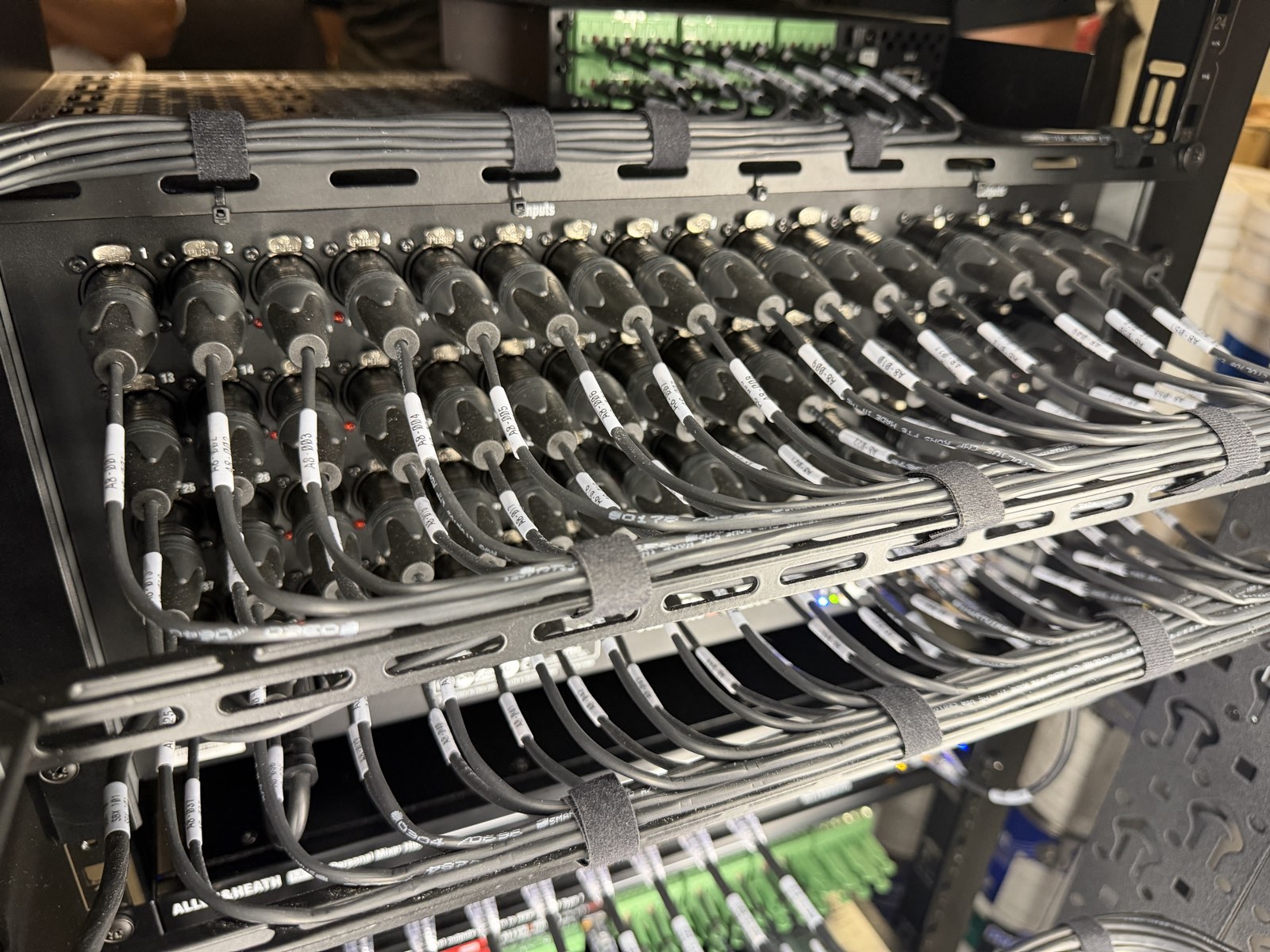
Behind every good system is processing that nobody on Sunday ever touches. Amplifiers with built-in DSP (digital signal processing) handle crossovers, time alignment, limiting and EQ for the room. We often specify Powersoft amplifiers, with Q-SYS for system-wide processing and control when a building needs it.
For permanent installs we usually prefer passive loudspeakers powered from a central amp rack. It keeps power and electronics in one serviceable place rather than at every speaker position overhead.
Then the system is tuned. We measure the room with a calibrated microphone and adjust the processing until the system sounds right in every zone. This is where a well-designed system becomes a great-sounding one, and it is locked in so no one can accidentally undo it on a Sunday morning.
The console and the people who run it
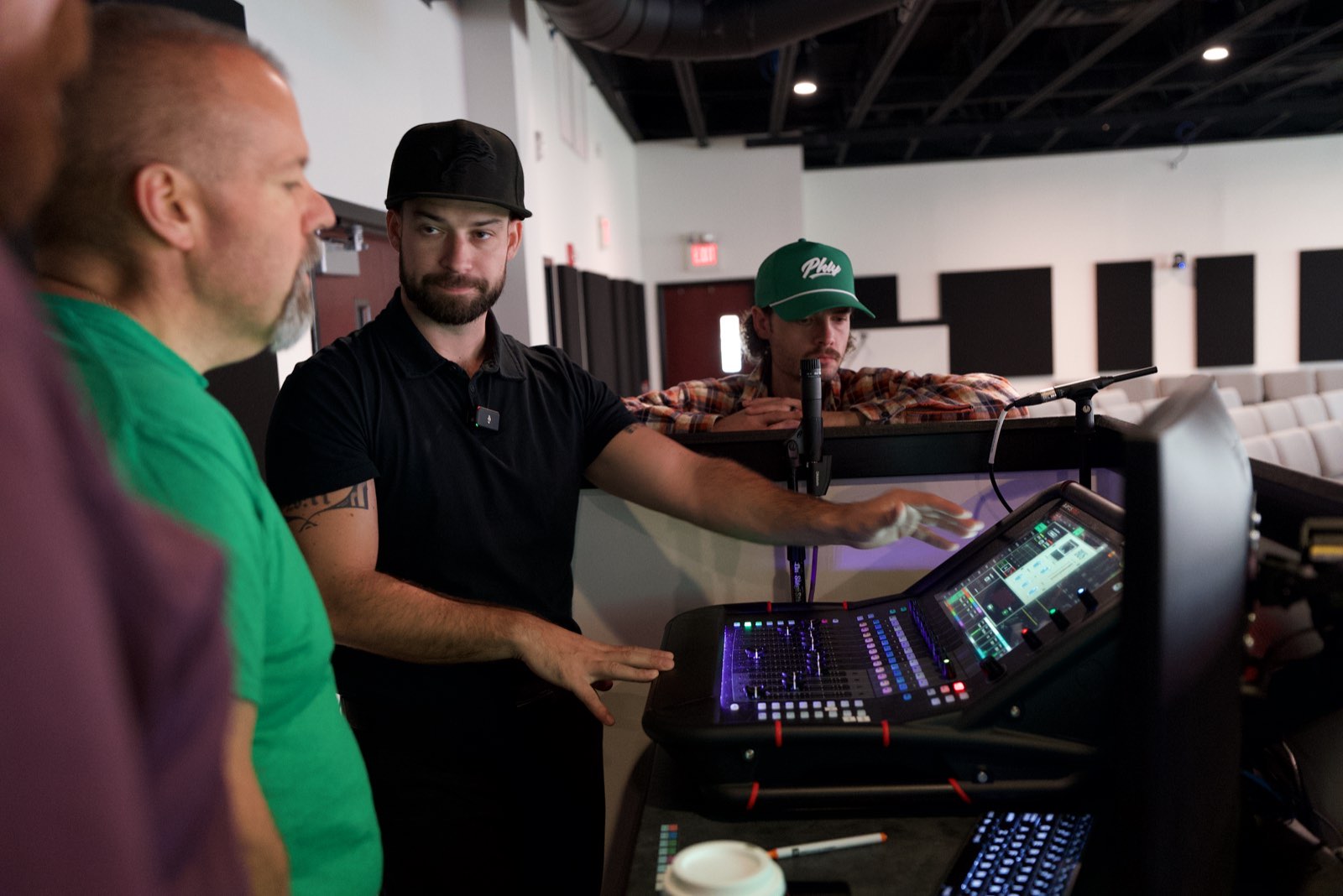
Most churches run sound with volunteers, and many weeks it is one person. A good design makes that person successful.
Allen & Heath is the console we specify most often: the SQ series for many rooms, and Avantis or dLive for larger ones. What matters more than the brand is how the console is set up. We build scenes for your services so every Sunday starts from a known-good mix, lay out the channels the way your team thinks, and train your volunteers on your system in your room.
Wireless microphones need the same care. Shure SLX-D and ULX-D systems are our usual choice, with RF Venue antennas and proper frequency coordination so headsets, lapels and in-ear packs do not interfere with each other. Charging stations and a simple storage routine keep batteries from becoming a Sunday morning emergency.
Don’t forget the stream and assistive listening
An online service needs its own mix. What sounds right in the room is rarely right in headphones, so we design a dedicated broadcast mix instead of tapping the house mix and hoping it translates. And every church should provide assistive listening for people with hearing loss. We typically use Listen Technologies systems, including options that stream to a guest’s own phone.
The manufacturers we specify most
We choose equipment from the design, not the other way around. That said, a handful of manufacturers show up across most of our work because they perform, they last and they are well supported:
- Loudspeakers: Fulcrum Acoustic is our most frequently specified loudspeaker, with Meyer Sound, L-Acoustics and RCF where the room and budget call for them.
- Amplification and processing: Powersoft and Q-SYS.
- Consoles and personal mixing: Allen & Heath.
- Wireless and in-ear monitors: Shure, with RF Venue antenna systems.
- Acoustic treatment: Primacoustic.
- Assistive listening: Listen Technologies.
The brand matters less than how the pieces work together. A premium speaker aimed at the wrong wall still sounds bad.
Common mistakes we see
- Buying speakers before modeling coverage.
- Adding power to a room that needs acoustic treatment.
- Leaving floor subs and wedges to flood the stage.
- Treating the livestream as an afterthought.
- Replacing gear that still has life in it, or keeping gear that holds the whole system back.
- Handing volunteers a console with no scenes and no training.
How to get started
If your church is planning a new system or trying to fix one that never sounded right, start by writing down how you worship, who runs sound and what the congregation complains about. That list is the beginning of a good design.
When you are ready for help, our team designs, installs and tunes church sound systems across the country, and the people who scope your system are the people who build it. See how we approach church sound system design and installation, or start with a pre-design visit.
Church PA system questions
How much does a church PA system cost?
It depends on the room far more than the size of the church. Room shape, acoustics, seat count and existing infrastructure move the number more than any single speaker. A responsible integrator scopes the room before giving you a budget.
Why can people hear the pastor but not understand them?
Loudness and intelligibility are different problems. Reflections and overlapping speakers blur words together even at high volume. The fix is usually better coverage, pattern control and acoustic treatment, not more power.
Does our church need a line array?
Not always. Line arrays suit wide, deep rooms. Many sanctuaries are better served by point source, column or distributed systems. The format should come from a coverage model of your room.
Should we use active or passive speakers?
Both can sound excellent. For permanent installs we usually prefer passive speakers powered from a central amp rack, because it keeps electronics serviceable and avoids running power to every speaker position.
Can we keep some of our existing equipment?
Often, yes. Retuning, re-aiming or adding the right piece can make a real difference. An honest evaluation should tell you what is worth keeping and when working around something costs more than replacing it.
HOW MUCH IS QSC LINE ARRAY SPEAKERS