
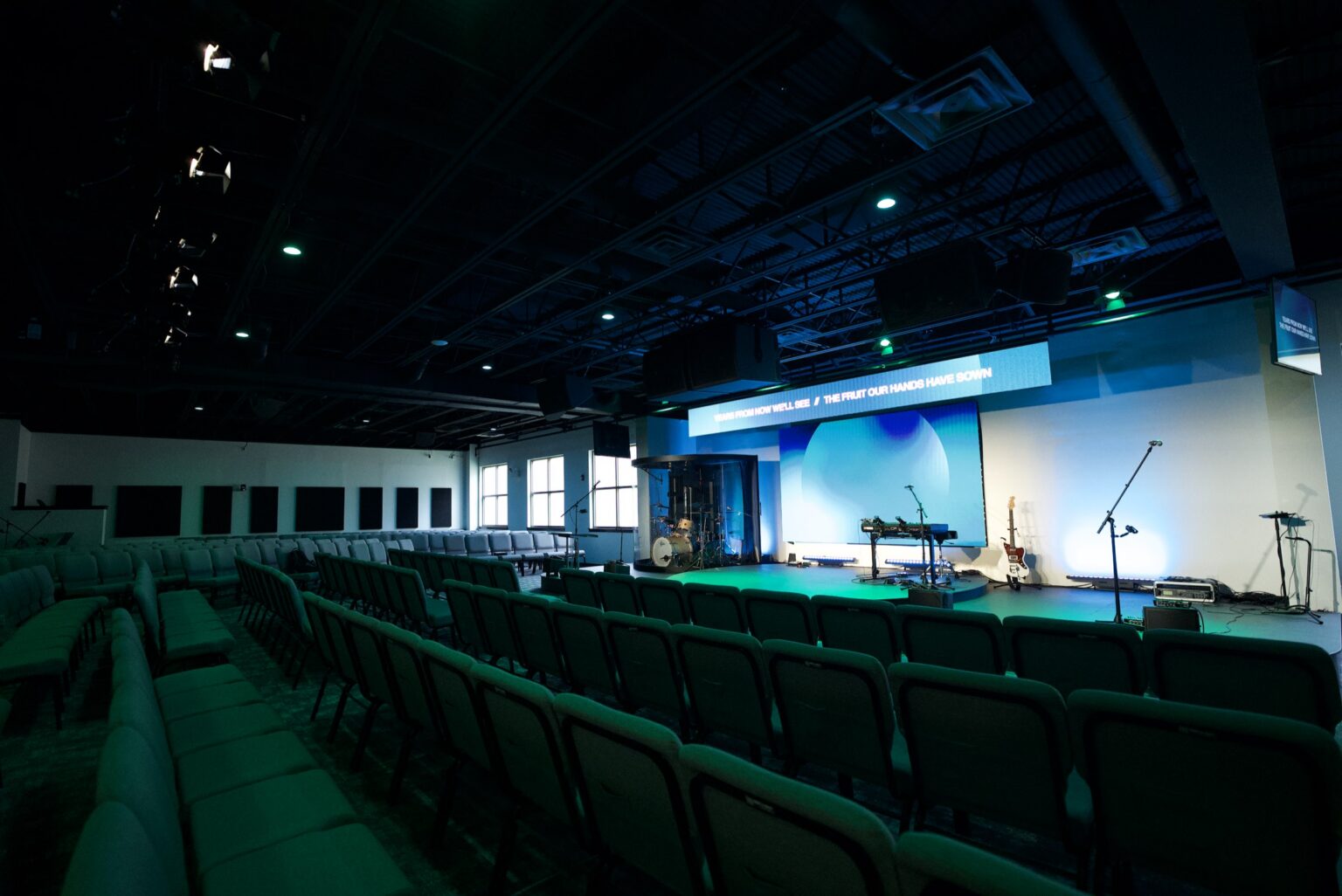
Church acoustics and acoustic treatment
A room where every word of the sermon is clear and the worship still feels alive. Churchfront measures, designs and installs acoustic treatment for churches across the country, as part of a sound system or on its own.
The usual way
A new sound system, and the same muddy room
No speaker sounds like itself in an untreated room. When reverberation is the real problem, a new PA only makes the echo louder, and the money that should have fixed the room went into equipment instead.
- Words blur together, especially for older listeners
- The band gets louder every year to be heard over the room
- Panels bought online, hung where they fit rather than where they work
- A room so dead the congregation feels like it is singing alone
- Treatment that makes the room look like a recording studio
- Mechanical and HVAC noise nobody has measured

How we treat a room
Measure first, then treat only what needs it
We measure the room
We capture an impulse response and measure reverberation time, known as RT60, so the treatment plan comes from your room rather than from a rule of thumb.
We set a target for your worship
A room for spoken word, a live band and congregational singing needs a different target than a lecture hall or a studio. We aim for clarity without taking the life out of the room.
We place it where it works
Quantity and placement matter more than brand. Wall panels, clouds and bass treatment go where the measurements say they will make a difference.
We make it look finished
Fabric, finish and edge detail decide whether a room looks treated or looks designed. We choose treatment that reads as part of the architecture.
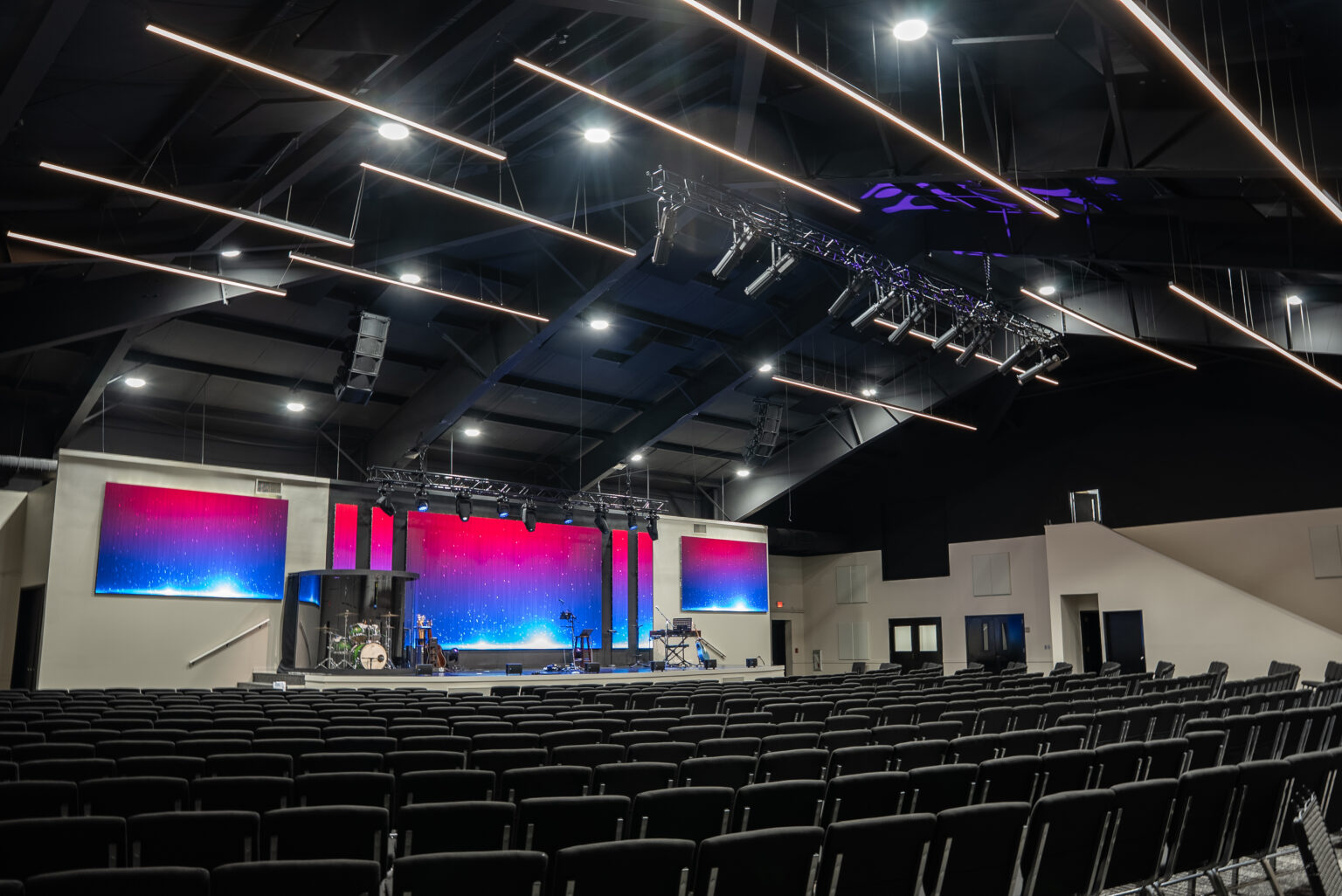
What we design and install
The room is part
of the sound system.
Acoustics, speakers and stage volume all shape what the congregation hears. We design the treatment together with the sound system, so neither one is compensating for the other.
Acoustic measurement
A clear picture of how your room behaves before anything is bought.
Impulse response and RT60 measurement. Reflection and echo analysis. Background and HVAC noise assessment.
Wall panels
Broadband absorption placed at the reflection points that smear speech.
Fabric-wrapped absorption panels. Impact-rated panels for gyms and multipurpose rooms. Custom sizes and finishes.
Ceiling clouds and baffles
Treatment overhead where wall space is limited or the ceiling is the problem.
Suspended clouds and baffles. Rigging and structural coordination.
Bass control and diffusion
Low-frequency buildup and harsh reflections handled without deadening the room.
Bass traps. Diffusion and slat wall treatments. Rear wall treatment.
Stage volume
A quieter stage makes treatment and the PA work far better.
Drum enclosures and electronic kits. In-ear monitoring. Amp isolation.
New construction acoustics
Room shape, finishes and mechanical noise are cheapest to get right before the walls go up.
Coordination with architects on geometry and finishes. HVAC noise review. Acoustic targets in the design documents.
The work
An office building that became a worship room
Next Community Church chose to plant rather than build, so their commercial office space had to work as a sanctuary. The reverb would have wrecked intelligibility, and the ceiling was too low for most of the usual answers.
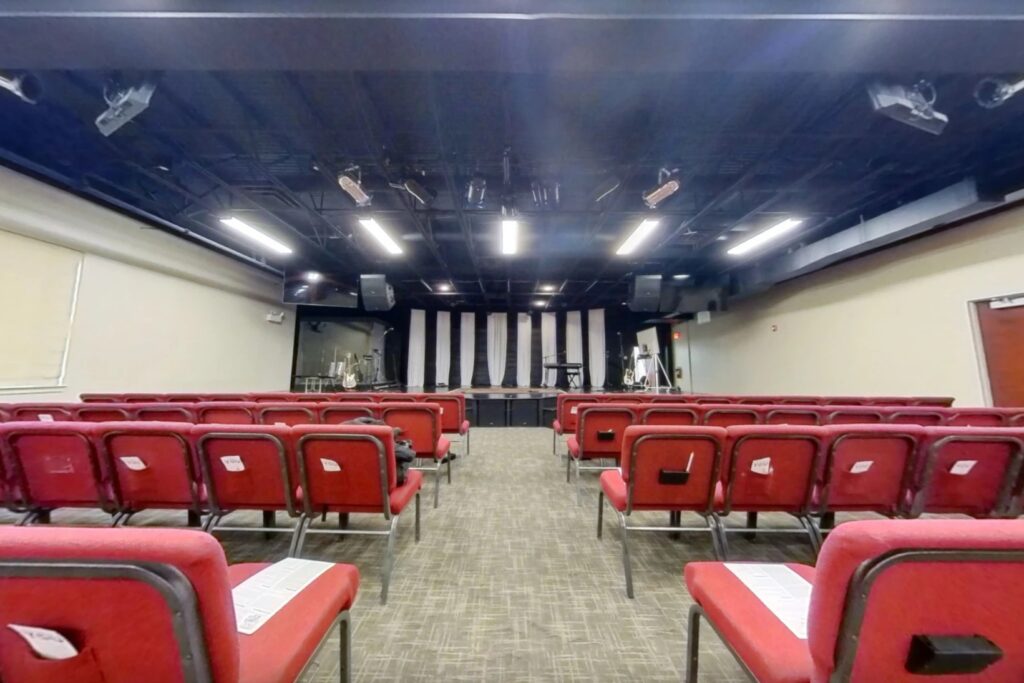
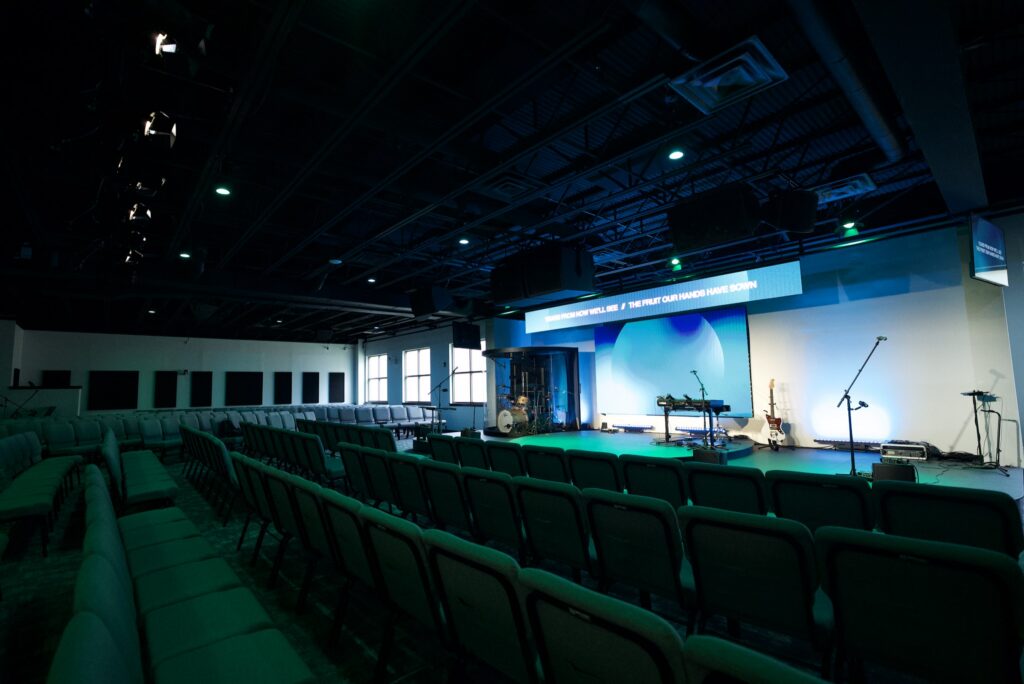
We started with a balloon pop and an impulse response, measured the RT60, and worked with Primacoustic on the right quantity of treatment to bring it to about two seconds. Wall panels through the room, larger squares where they were needed, and clouds overhead. That one step made the room work for both spoken word and a live band.
More projects
Every room gets a different answer
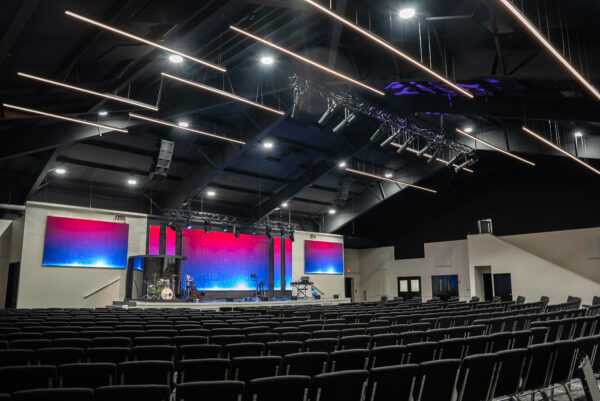
First Baptist Church Pontotoc
A basketball gym turned 600-seat worship center. Linen-wrapped panels with bevelled edges, so the room looks finished rather than treated.
Pontotoc, Mississippi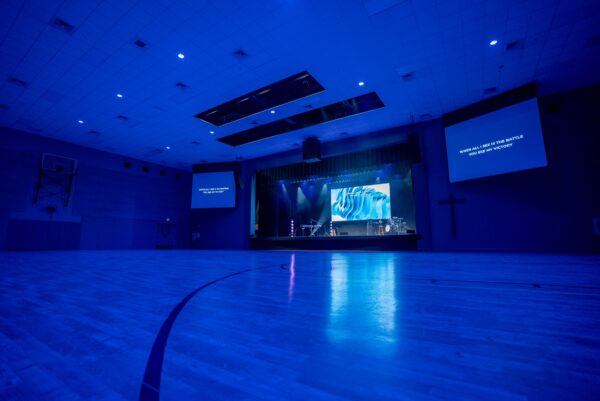
Palm City Presbyterian
A gym used for volleyball and basketball all week. Treatment went in at listener height, rated to take a hit from a ball.
Palm City, Florida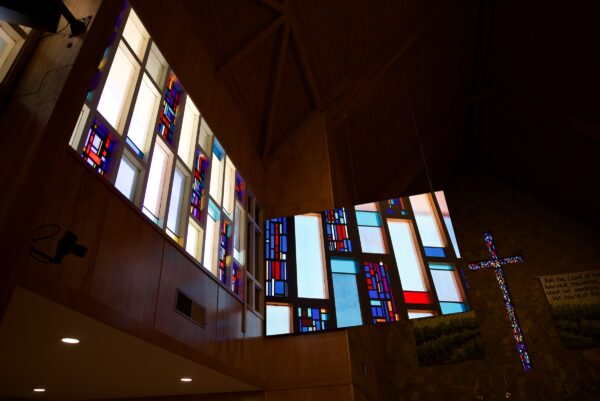
St. John’s Lutheran Church
A timber sanctuary with over three seconds of reverb, left untreated on purpose for the organ and choir. Precise speakers keep the mix under control instead.
Napa, CaliforniaCommon questions
Church acoustics questions
Does our church need acoustic treatment?
If speech is hard to understand even when it is loud enough, or the band keeps getting louder to be heard, the room is often the cause. Measuring the reverberation time tells you for certain. Some rooms, especially traditional sanctuaries with an organ and choir, are better left mostly untreated.
How many acoustic panels does a church need?
It depends on the room's size, surfaces and current reverberation time, and on the target for your style of worship. Placement matters as much as quantity. We calculate both from measurements rather than guessing.
What is RT60 and what should it be for a church?
RT60 is the time it takes sound to fade by 60 decibels, a standard measure of how reverberant a room is. There is no single right number. A room for contemporary worship and preaching usually wants less reverberation than a traditional sanctuary built around an organ and choir, and we set the target from how you worship.
Will acoustic treatment make our sanctuary sound dead?
Not if it is designed well. The goal is clear speech and a controlled low end while keeping enough life for congregational singing. Over-treating a room is a real mistake, and we measure to avoid it.
Can acoustic panels look good in a church?
Yes. Fabric color, finish, edge detail and layout decide whether treatment reads as architecture or as a studio. We choose and place panels so the room looks finished.
Should we treat the room or buy a new sound system first?
If the room is the problem, treat the room first. A new PA in an untreated room will not deliver what you paid for. When we design both, we plan them together so each one is sized for the other.
Do you install acoustic treatment outside Florida?
Yes. We are headquartered in Melbourne, Florida and work nationally. Our own crews travel for installation, and travel is scoped and priced in the proposal.
Let’s talk about your room.
Tell us what your room sounds like on a Sunday. We will tell you honestly whether the room, the system or both need attention, and what to do first.