
The short answer: the equipment for a church LED wall runs from roughly $13,000 for a small wall at a coarser pixel pitch to around $90,000 for a large, fine-pitch wall. On our recent projects the LED wall has come in between $27,000 and $44,000. Installation, structure and power are on top. Size and pixel pitch drive most of the cost.
These are very rough ballparks to help a church size the conversation. This guide shows where the numbers come from, what they include, and how to avoid the most common way churches overspend on a wall.
In this guide
- Ballpark ranges by size and pitch
- What the price includes, and what it does not
- Pixel pitch: the biggest lever on cost
- What else moves the number
- Real examples
- How to get a real number
- Common questions
- Next steps
Ballpark ranges by size and pitch
The figures below are for the wall itself: LED panels, a processor, spare parts, road cases, shipping and the hardware to fly it. They use current pricing for the Altitude LED Cloud series, the wall we specify on nearly every project. A fine pitch (1.9 millimeters) and a coarser pitch (3.9 millimeters) are shown to mark the two ends. Most sanctuary walls we design use 2.6 millimeters, which falls between them.
- A smaller wall, about 10 feet wide by 6.5 feet tall: roughly $13,000 at 3.9 mm, up to about $20,000 at 1.9 mm.
- A mid-size wall, about 16.5 feet wide by 10 feet tall: roughly $29,000 at 3.9 mm, up to about $46,000 at 1.9 mm.
- A large wall, about 24.5 feet wide by 13 feet tall: roughly $54,000 at 3.9 mm, up to about $89,000 at 1.9 mm.
On three recent Churchfront projects that included an LED wall, the wall came in between $27,000 and $44,000. One of those used two walls of about 11.5 by 6.6 feet at 2.6 mm, at roughly $13,000 each.
What the price includes, and what it does not
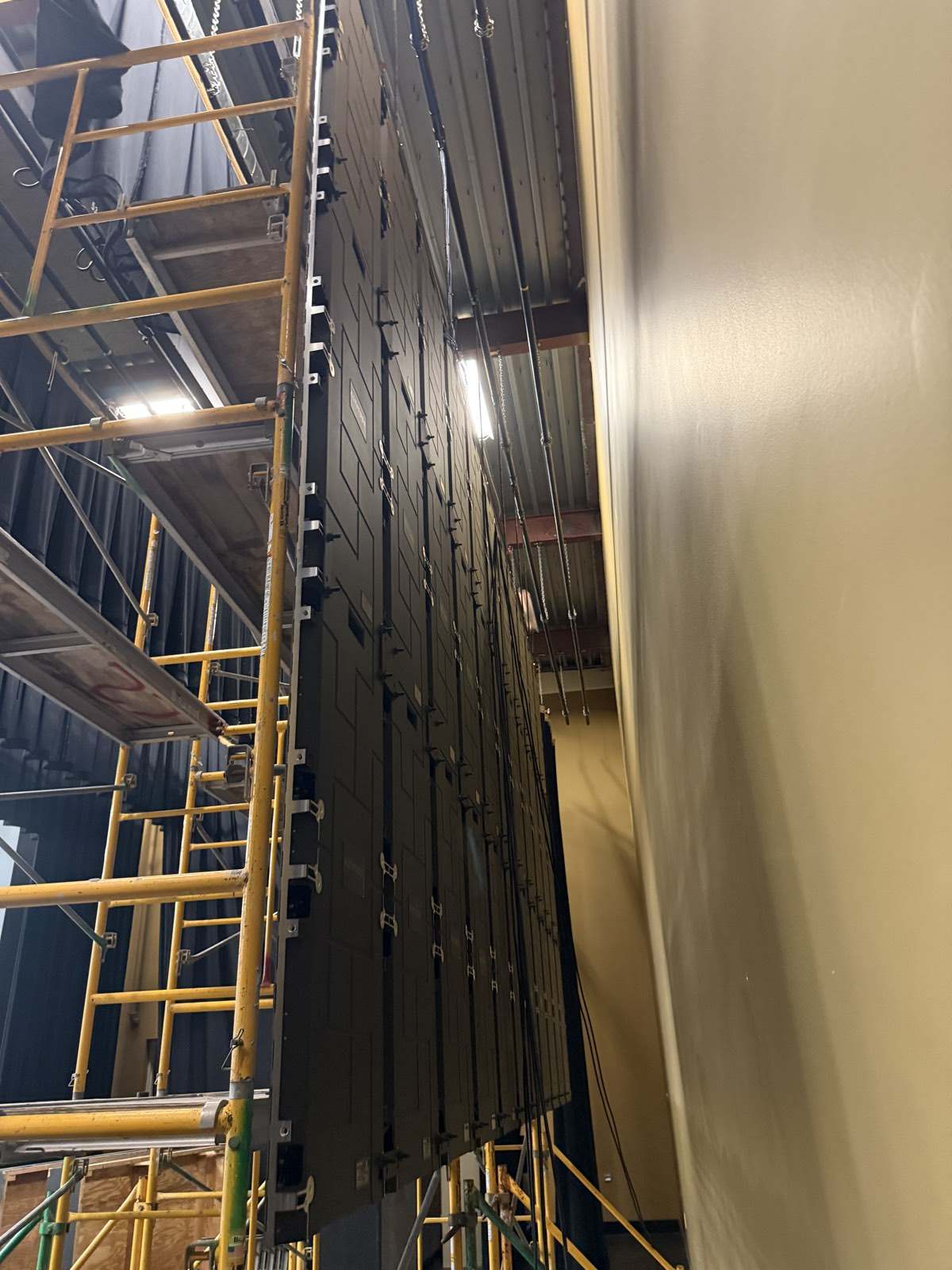
The ranges above cover the wall as a product. A finished, working wall needs more:
- Structure. A wall is heavy. Whether it hangs, mounts to a wall or stands on the floor, the mounting has to be engineered. A flown wall needs a structural review, which typically runs $2,000 to $10,000.
- Power. LED walls draw real power and usually need new circuits, installed by a licensed electrician.
- Installation and calibration. Assembling the panels, cabling them, mapping the processor and calibrating brightness and color with your stage lighting and cameras.
- Content and control. A presentation computer and software to drive the wall, and backgrounds to put on it.
- Service access. Space or a method to reach the panels when one needs replacing.
Across our projects, design, installation, commissioning and training have run around 40 percent of the equipment and materials cost for the whole project. That is a project-wide figure, not one specific to LED, but it is a reasonable guide to what the labor side adds.
Pixel pitch: the biggest lever on cost
Pixel pitch is the distance between the tiny lights that make up the picture, measured in millimeters. A smaller number means more pixels, a sharper picture up close and a higher price. At the sizes above, a 1.9 mm wall costs about 50 to 65 percent more than the same wall at 3.9 mm.
The right pitch comes from your viewing distances, not a price list. A common rule of thumb is about eight to ten feet of viewing distance for every millimeter of pitch. If your front row is 25 feet from the wall, a 2.6 mm pitch looks clean. If people sit 12 feet away, or your cameras shoot tight shots with the wall behind the speaker, a finer pitch earns its cost.
A finer pitch than your seats need is the most common way churches overspend on an LED wall. Most churches land between 2.5 and 4 millimeters.
What else moves the number
- Size. Cost rises with area. A wall sized for your content and sightlines, not for effect, keeps it in check.
- One wall or several. A center wall with side screens, or a wall plus accent strips, adds panels and processing.
- How it mounts. Flown, wall-mounted and ground-supported walls each have different structure costs.
- Processing. Larger and finer walls need more capable processors, and sometimes two.
- Camera use. If the wall appears on your livestream, panel refresh rate and camera settings have to be checked together to avoid flicker and lines.
- What you replace. Keeping projection for side screens and using LED only at the center is a common way to get the benefit where it matters.
Not sure LED is the right choice at all? Our guide to planning a church LED wall covers how to decide between LED and projection.
Real examples
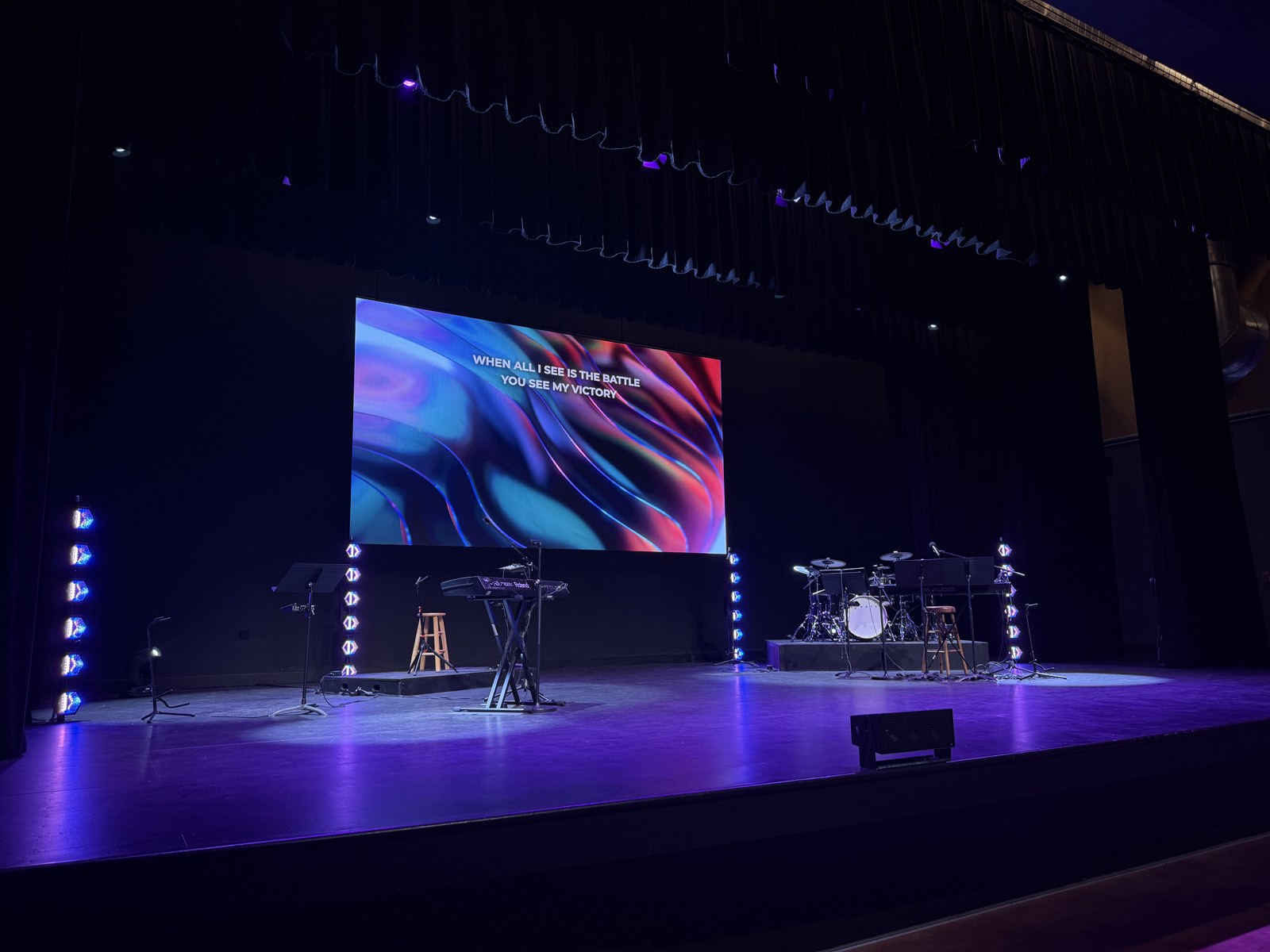
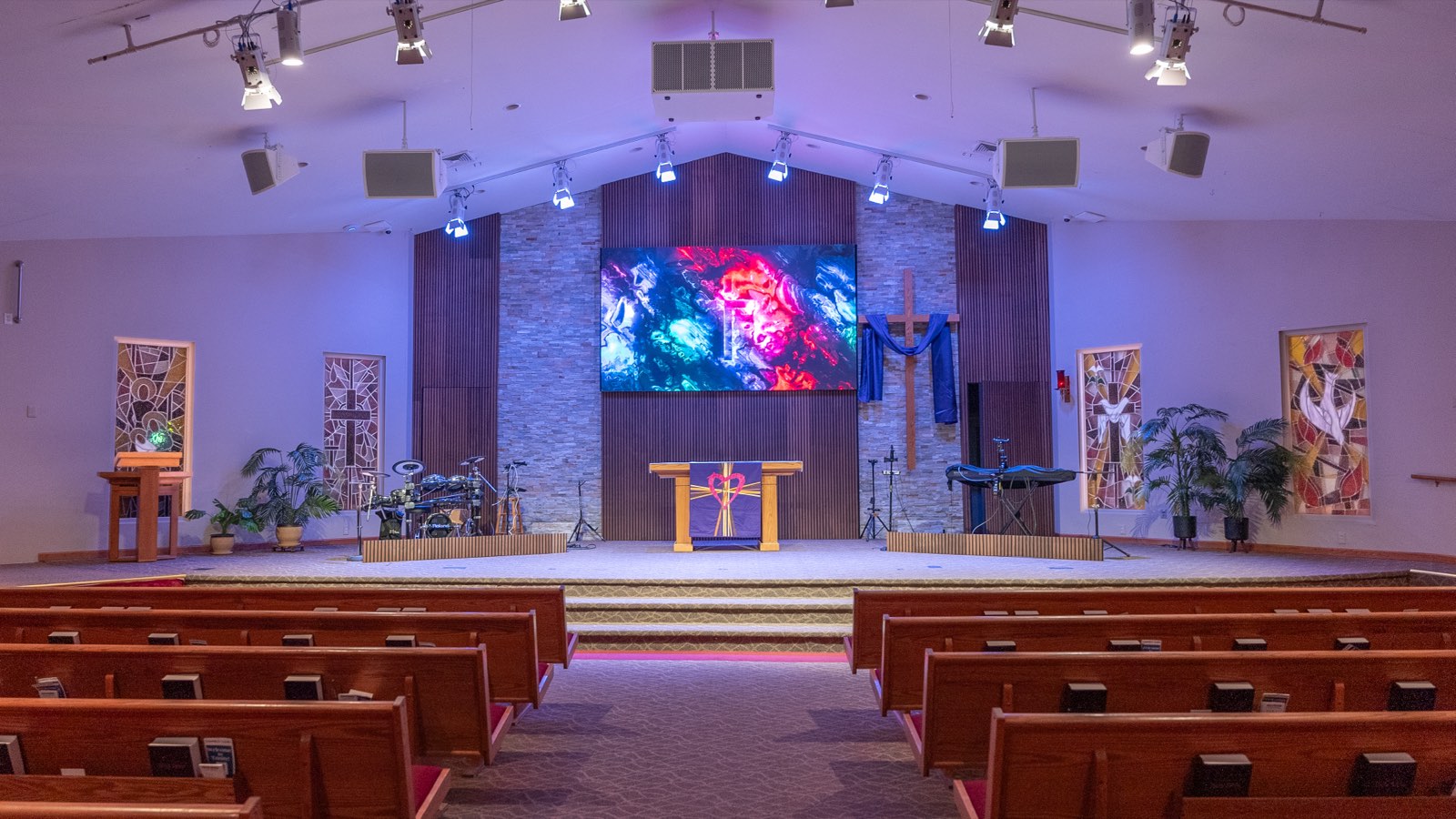
- Agoura Bible Fellowship, 250 seats: a 1.9 mm Altitude Cloud center wall of 2.5 by 1.5 meters with two portrait side walls. A small room where people sit close, so the fine pitch made sense. See the Agoura project.
- Go Elevate Church, 700 seats: an 11.5 by 23 foot wall at 1.9 mm, chosen because the band stands two to three feet from the wall and cameras shoot close. See the 1.9 mm wall walkthrough.
- Palm City Presbyterian: an 18 by 9.8 foot Altitude wall in a multipurpose room.
- Trinity Church: an LED wall that replaced rear projection.
How to get a real number
Three decisions set the price: how big, what pitch, and how it mounts. All three depend on your room. In our pre-design service we measure sightlines and viewing distances, look at the structure and power, and give you budget ranges in a Program Report you can take to your board. The fixed price comes after engineering, when the wall has been modeled in your room.
Common questions
How much does a church LED wall cost?
As a very rough guide, the equipment for a church LED wall costs between about $13,000 and $90,000 depending on size and pixel pitch. On our recent projects it has come in between $27,000 and $44,000. Installation, structure and electrical work are additional.
Is an LED wall more expensive than a projector?
Usually, yes, for the same screen size. LED earns the difference in rooms with daylight or a brightly lit stage, where projection washes out. In a dark sanctuary a modern laser projector can still be the better use of the budget.
What pixel pitch does a church need?
It depends on how close people sit. A common rule of thumb is eight to ten feet of viewing distance per millimeter of pitch. Most churches land between 2.5 and 4 millimeters, with finer pitches where people sit close or cameras shoot tight.
What size LED wall does a church need?
Big enough that the back row can read lyrics comfortably, and shaped for the content you show. Size it from sightlines and viewing distance, not from the width of the stage.
How long does a church LED wall last?
A well-chosen wall with spare panels and service access should serve a church for many years. Buying spares from the same production batch at the start matters, because panels made later may not match in color.
Next steps
Measure the distance from your front row and your back row to where the wall would go, and note how much daylight reaches the platform. Those three facts settle most of the decision.
When you are ready for a number based on your room, see how we approach church LED wall design and installation, or start with a pre-design visit.