
A lot of churches start an AV project by asking one question:
“What speakers should we buy?”
That’s understandable. The PA system is the most visible and audible part of the upgrade. When the system sounds better, everyone notices.
But the best church AV projects are rarely just about swapping out old speakers for new ones.
At North Metro Church in Colorado, the goal was bigger than a new PA. The church needed a system that sounded great, worked reliably every week, supported simple events, cleaned up infrastructure, reduced stage clutter, and gave their team more flexibility.
In this video, I walk through the full AV system Churchfront designed and installed at North Metro Church.
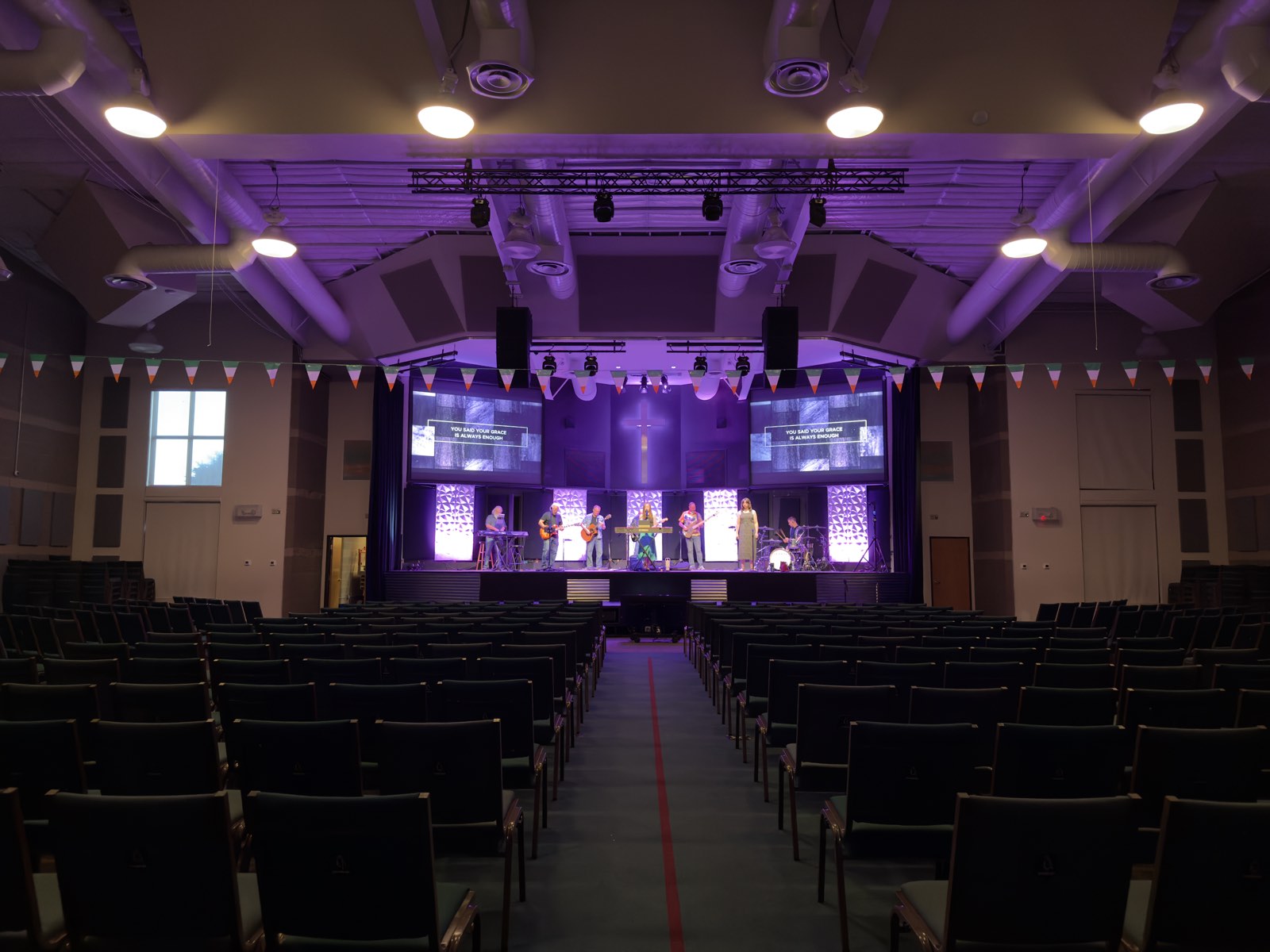
The project included a Fulcrum Acoustic constant curvature PA, a major rack build, new patch bays, stage pockets, lighting control, power sequencing, personal monitoring, and front-of-house workstation upgrades.
Here’s what churches can learn from this project.
Start With Coverage, Not Just Volume
The centerpiece of this upgrade is a Fulcrum Acoustic constant curvature PA system.
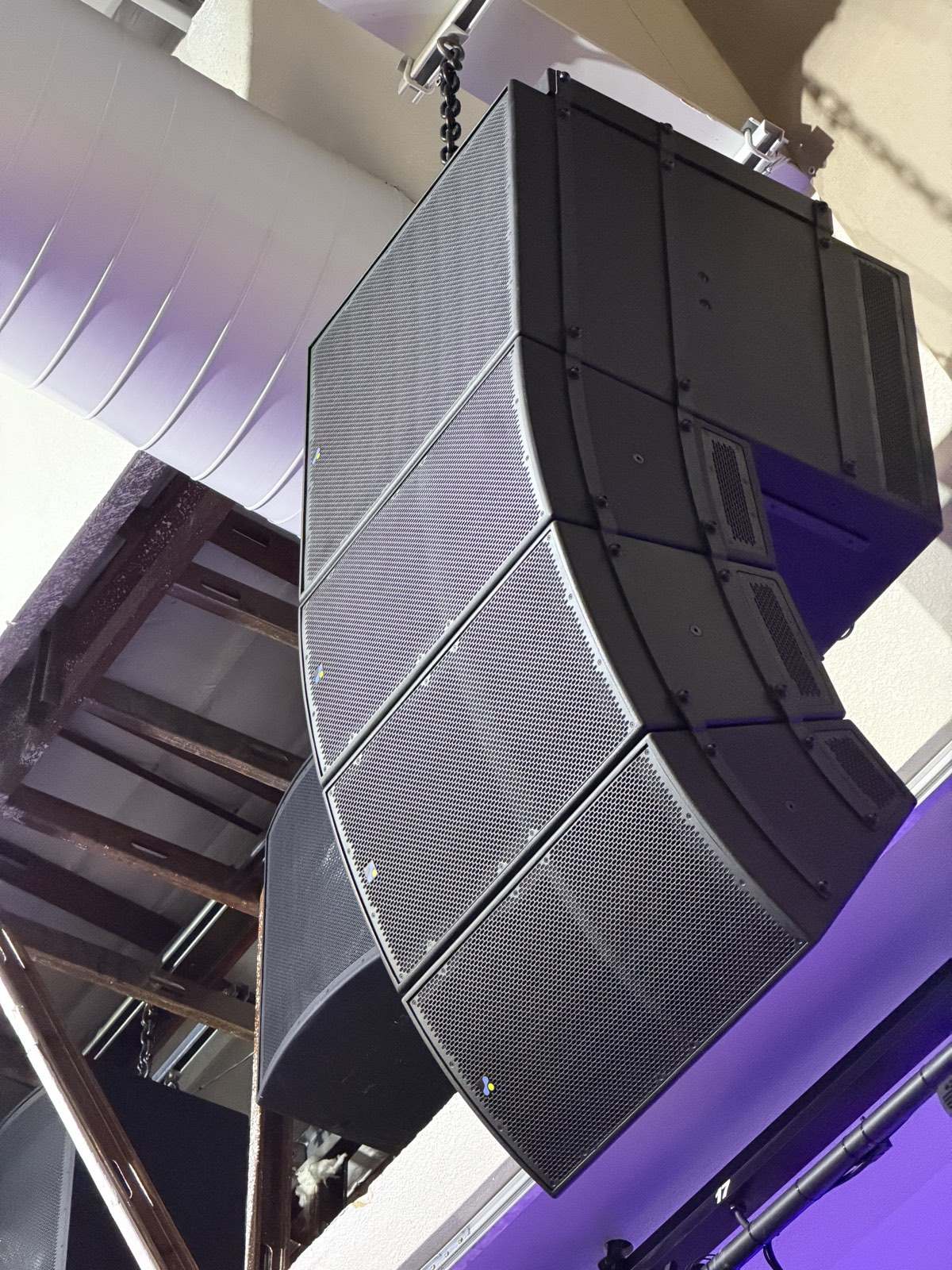
For a room like this, the goal is not just to make the system louder. The goal is to create consistent coverage from front to back and side to side, so every seat has a clear listening experience.
The system includes constant curvature arrays built from CC215 and CC230 elements (15 and 30 degrees), CCS18 subwoofers integrated into the arrays, and additional Sub118 subwoofers hidden in the soffit. We also added Fulcrum Acoustic RX6 front fills in the stage thrust.
That matters because the closer you get to the front of the stage, especially toward the sides, the more likely you are to leave the coverage pattern of the main arrays. Front fills help those seats still hear clearly without overdriving the main PA.
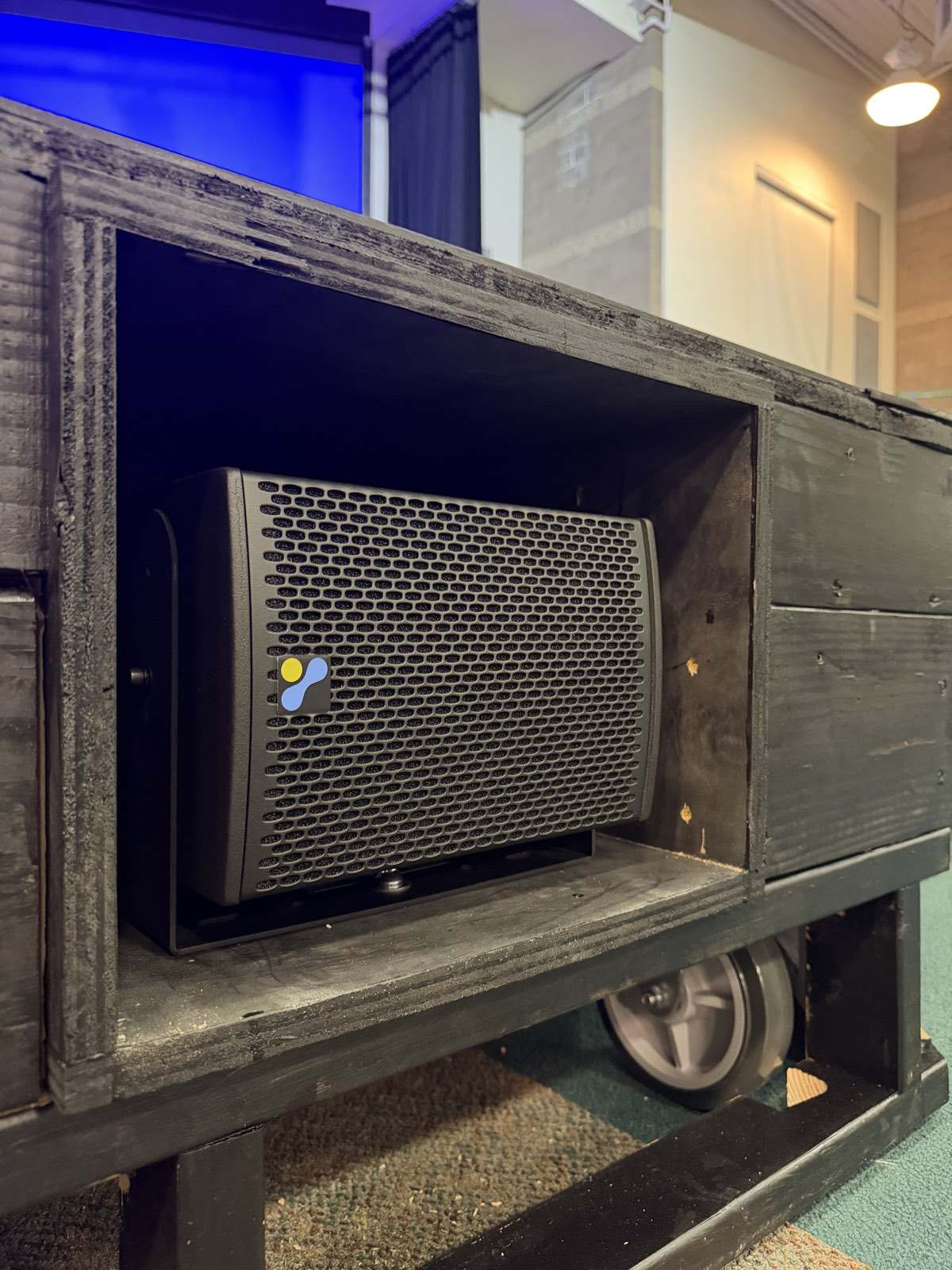
This is one of the reasons we talk about AV as a system, not a shopping list.
The PA, front fills, subs, stage design, tuning, microphone choices, and room acoustics all work together. If you only think in terms of “which speakers,” you miss the bigger picture.
Infrastructure Makes the System Easier to Use
One of the most impressive parts of this project is the rack.
At first glance, some people might look at the front of the rack and wonder why there are so many blank panels. But the back tells the real story.
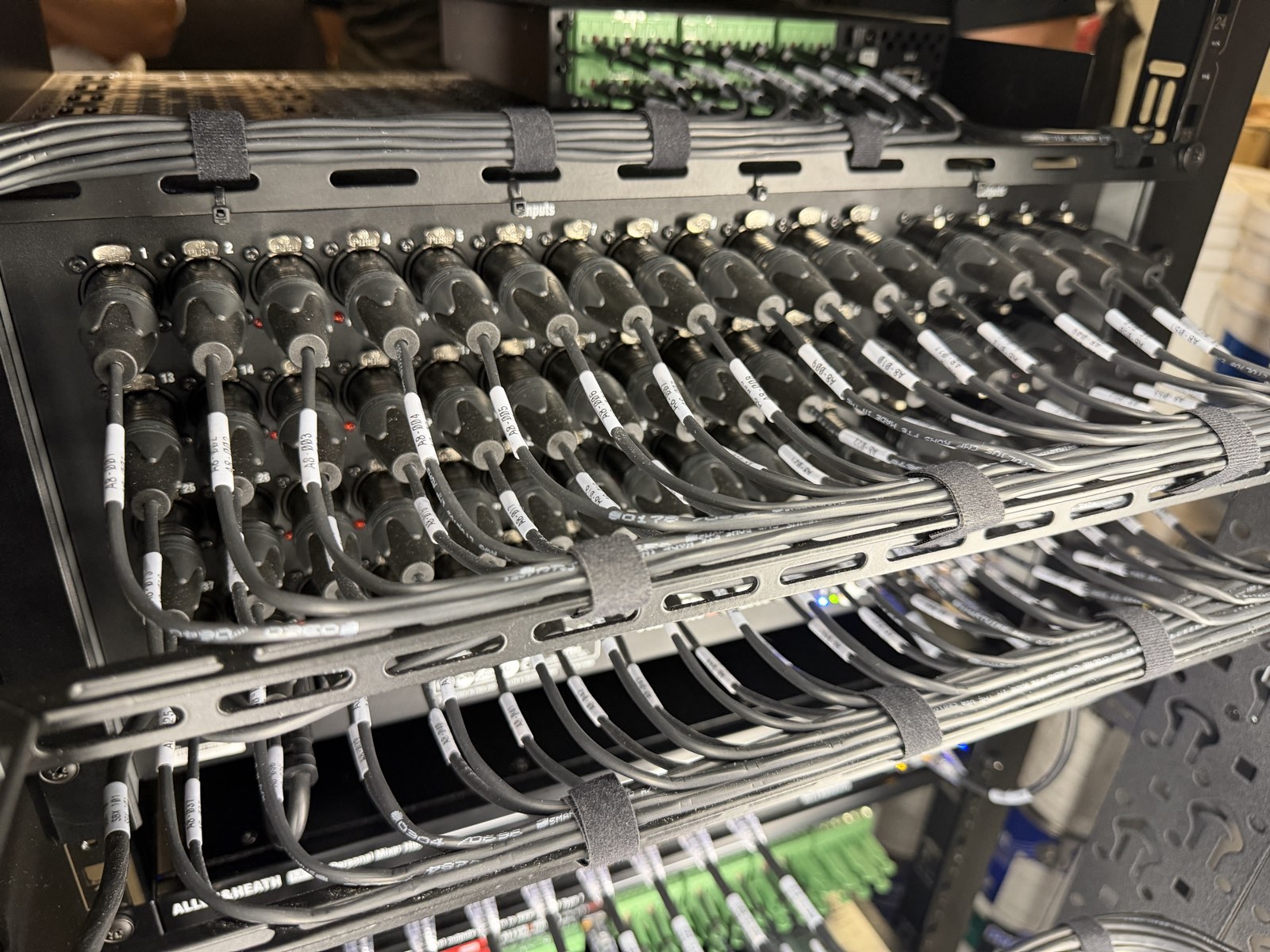
This rack is packed with infrastructure: an Allen & Heath GX4816 stage box, an Allen & Heath ME-U for personal monitoring, Bittree patch bays, network switching, DMX distribution, wireless microphone systems, in-ear monitor transmitters, and a lot of carefully organized cabling.
The patch bays are especially important.
North Metro has stage inputs, audio outputs, wireless systems, the AHM processor, and other devices all wired into patch bays. This lets their team route signals where they need them without rebuilding the system every time.
For example, a stage input can normally route straight into the corresponding channel on the stage box. But if the team needs to patch that input somewhere else, they can do that directly at the rack.
That kind of flexibility is not flashy, but it is incredibly valuable.
It means the system can adapt to different events, setups, and ministry needs without creating chaos.
Simple Events Should Not Require the Full Console
One of the smartest pieces of this system is the Allen & Heath AHM processor.
The AHM gives North Metro a simple control layer for events that do not require a full front-of-house mix. For example, if the church is hosting a Bible study or a simple gathering, they may only need one microphone and basic PA control.
Instead of requiring someone to turn on and operate the Allen & Heath Avantis console, the AHM can be configured with custom control from an iPhone app or simple interface.
That is a huge win for churches.
Not every event needs a trained audio engineer. A well-designed system should give volunteers and staff the right level of control for the event they are running.
The goal is not to make the system less powerful. The goal is to make the right workflows simple.
Stage Flexibility Requires Better Planning
North Metro has a unique stage thrust built by someone on their team. It is movable, which gives them flexibility for different room layouts and events.
It also includes a hidden teaching TV that rises out of a custom box. When the pastor needs visual aids during a sermon, the TV can appear. When it is not needed, it lowers out of the way and preserves sightlines.
That is a great ministry solution, but it creates AV design challenges.
If the stage element can move, the cable infrastructure connected to it has to be flexible too. In this project, we had to account for detachable front fill speaker lines, network tie lines, and video connections for the teaching TV.
This is where the stage pockets, wall plates, and patching infrastructure become essential.
Instead of running long cables across doorways or taping down messy temporary lines, the team has connection points where they need them. That keeps the room cleaner, safer, and more adaptable.
Quieter Stages Help Everyone
North Metro also chose an EFNOTE PRO 700X electronic drum kit.
This is a strong option for churches that want a more controlled stage volume without putting a full acoustic drum kit behind a large enclosure. From a distance, the kit still looks like a real drum set, but it dramatically reduces the amount of acoustic energy coming off the stage.
Pair that with a well-designed PA and personal monitoring system, and the whole worship environment improves.
The musicians get clearer in-ear mixes. The mix engineer hears cleaner source material. Vocals and instruments are not fighting as much stage bleed. The congregation gets a more balanced sound in the room.
This is another example of the system mindset.
Better sound is not just about one piece of gear. It is about how the PA, stage volume, monitors, room, console, and musicians all interact.
Front-of-House Should Support the Team, Not Fight Them
North Metro’s front-of-house area also got a major refresh.
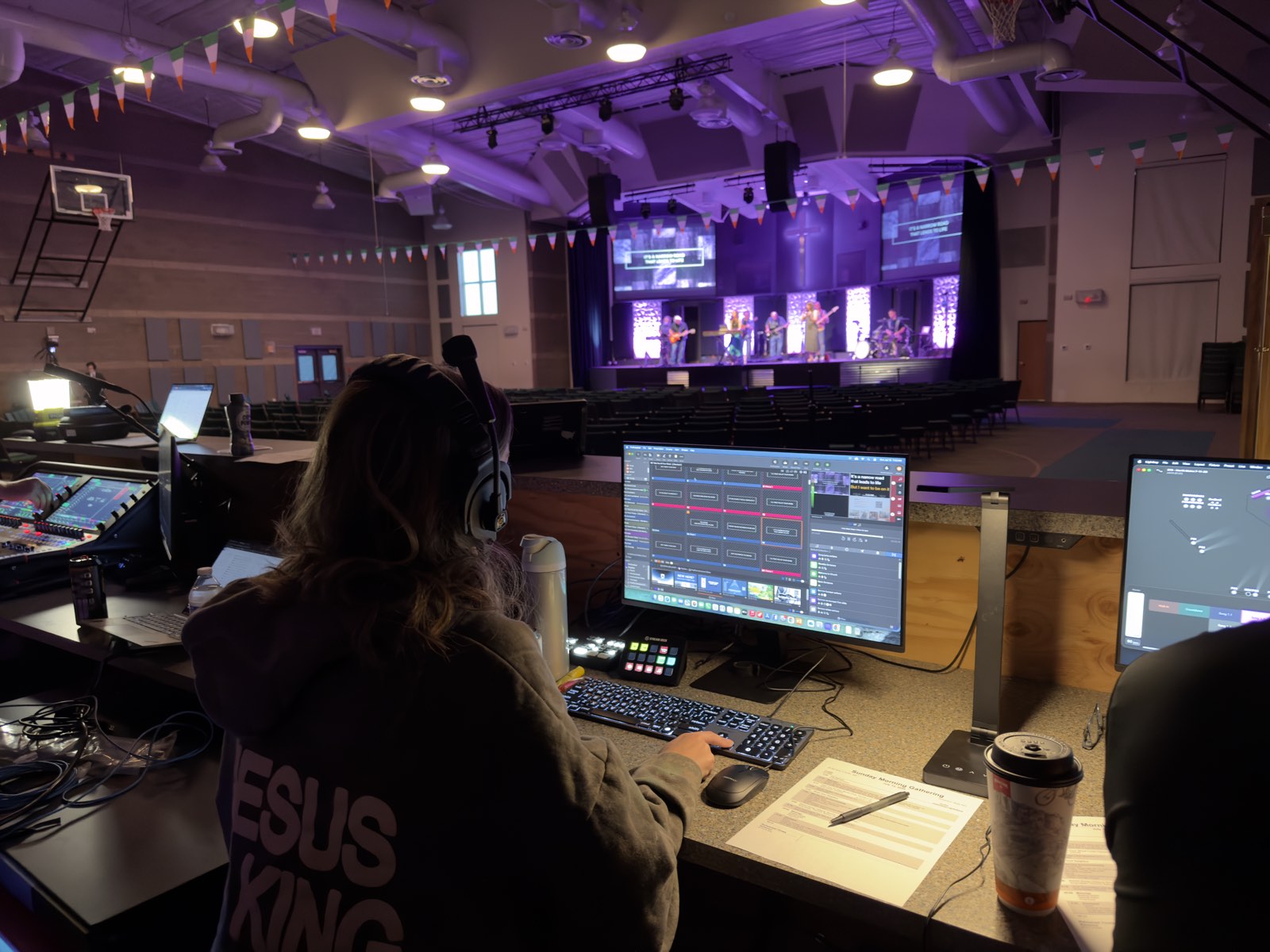
The church kept much of their existing video system, but we cleaned up the workstation area, updated computers, added network infrastructure, and installed ADDERLink XDIP KVMs. This allows operators to toggle between different machines with a simple keyboard command.
The system includes Mac minis in Sonnet rackmount chassis, an expansion chassis for DeckLink cards, and a dedicated support machine our team can remote into when needed.
That last piece matters.
When remote support is needed, we do not want to take over a volunteer’s workstation in the middle of a service. A dedicated support machine gives our team a way to troubleshoot the system without disrupting the people operating it.
Solving Feedback Before It Becomes a Problem
Because North Metro’s stage thrust allows the pastor to move farther forward, there was a greater risk of the pastor’s headset microphone getting into the PA coverage zone.
That can create feedback problems if the system is not designed carefully.
To help solve this, we included a Rupert Neve Designs 5045 Primary Source Enhancer. It is a premium tool that helps reduce feedback risk on spoken-word microphones, especially in challenging stage layouts.
Could a church use a digital version of this type of processing in some systems? Yes.
But in this case, we wanted to be confident that the pastor could use the stage thrust without creating audio headaches for the team.
The Big Lesson: Build the System Around the Workflow
The most important lesson from this project is simple:
Great church AV is not just about better gear. It is about better workflows.
North Metro now has a system that gives them:
- Clearer coverage in the room
- Cleaner stage infrastructure
- Flexible patching
- Simple audio control for smaller events
- Better in-ear mixes
- Safer cable paths
- Remote support capability
- A foundation for future video upgrades
That is what a thoughtful AVL project should do.
It should make Sundays easier, give volunteers confidence, support ministry needs throughout the week, and create a foundation the church can keep building on.
If your church is thinking about an AV upgrade, do not start with a gear list. Start with the system.
What does your team need to do every week? What events do you host? Where do volunteers get stuck? What parts of the room are hard to cover? What infrastructure would make the system easier to operate?
Those questions lead to better solutions.
If you would like help designing your next church AV project, you can reach out to our team here: