
Church lighting design and installation
Faces the congregation can see, a picture that holds up on the livestream, and an atmosphere that supports worship instead of distracting from it. Churchfront designs and installs stage and house lighting for churches across the country, with controls your volunteers can run.
The usual way
A colorful stage, and faces nobody can see
Most church lighting is bought one fixture at a time, usually starting with the exciting ones. The result is a stage full of color with the most important thing, the person leading or preaching, still in shadow.
- Faces look dark or harsh in the room and worse on camera
- Front light glares into the eyes of the people on the platform
- The stage looks right in person but washed out on the livestream
- Fixtures bought over the years never quite match in color
- Cues are so complex that only one volunteer can run them
- House lights are either fully on or fully off

Why Churchfront
Lighting has two audiences on Sunday
Faces first, for the room
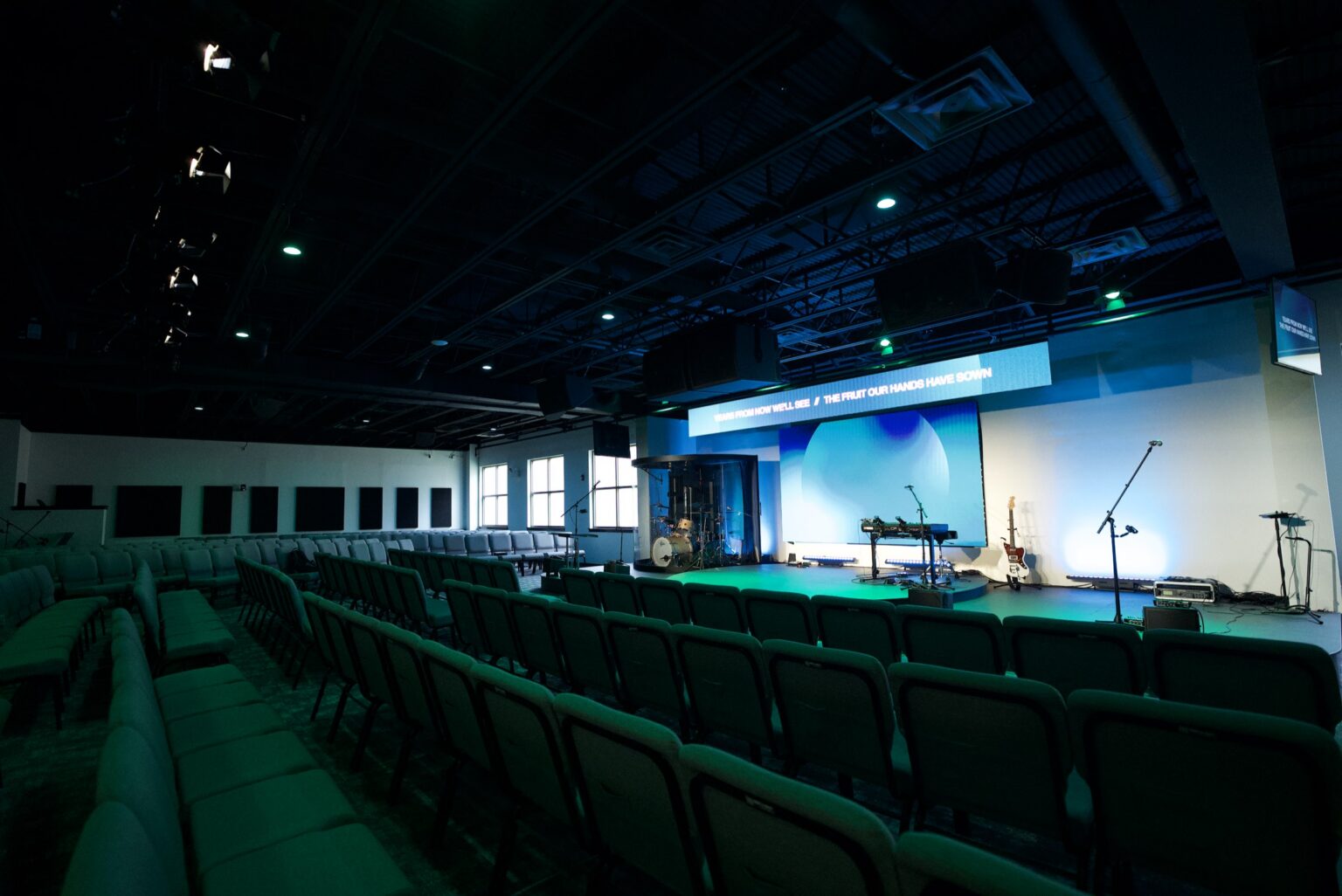
People connect with a worship leader or pastor they can see clearly. Front light comes first in every design, placed at angles that light faces well without blinding the people on the platform.
Faces again, for the camera
A camera needs more even light than the eye does. We balance front light, back light and your LED wall so the livestream looks as good as the room.
Atmosphere that serves worship
Color, wash and effects should support the moment, not turn the service into a show. We design looks that fit your worship style and your room.
Control a volunteer can run
Presets, simple consoles and wall panels mean a volunteer can bring up the right look without programming anything. The system works on the Sundays your lighting person is away.
What we design and install
Stage, house and control,
designed as one system.
Church lighting shares the room with your LED wall, your cameras and your sound system. We design it alongside them, so no one system undoes the work of another.
Front and key light
Even, flattering light on the platform, aimed so faces read clearly from every seat and on camera.
LED front light and key light. Positions and angles set from the room geometry. Color matched across fixtures.
Stage wash and effects
Back light to separate people from the background, and color and movement where they support the moment.
Wash, back light and moving fixtures. Truss and pipe positions. Haze where the room and HVAC allow it.
House and architectural lighting
House lights that can dim smoothly for worship and come up for teaching, and fixtures that can double as part of the room’s design.
Dimmable house lighting. Linear and architectural fixtures. Wall and scenic uplighting.
Control and programming
Looks programmed for your services and stored as presets, so Sunday starts from a known-good state.
Lighting consoles and software. ProPresenter-triggered cues. Wall panels and Stream Deck control for volunteers.
Power, data and rigging
The infrastructure that decides whether you can add fixtures later without opening walls or overloading circuits.
DMX distribution and networked lighting data. Power distribution and sequencing. Rigging and structural coordination.
Lighting for video
Lighting that works with the cameras and the LED wall, rather than washing one out or blowing out the other.
Camera exposure and color balance. LED wall brightness coordination. Separate looks for in-room and broadcast.
How we design church lighting
Designed on paper, focused in the room
Worship style and cameras
How your services flow, how much of the service is streamed, and where your cameras sit. The lighting is designed around both audiences.
Evaluate the room
Ceiling height, rigging positions, power, existing fixtures and daylight. We also tell you honestly which of your existing fixtures are worth keeping.
Photometric design
Photometric reports show how much light lands on the platform and how evenly, before anything is bought. Renderings let leadership see the looks in your actual room.
Engineer and price
Positions, rigging, power and data are engineered and documented. The phase ends with one price for the design as engineered.
Install, focus and program
Our own crews hang, cable and focus every fixture, then program the looks for your services and store them as presets.
Train the people who run it
Your volunteers learn the presets and the controls on your system, and you hold as-built documentation at closeout.
The work
Lighting a low room without a single kick light
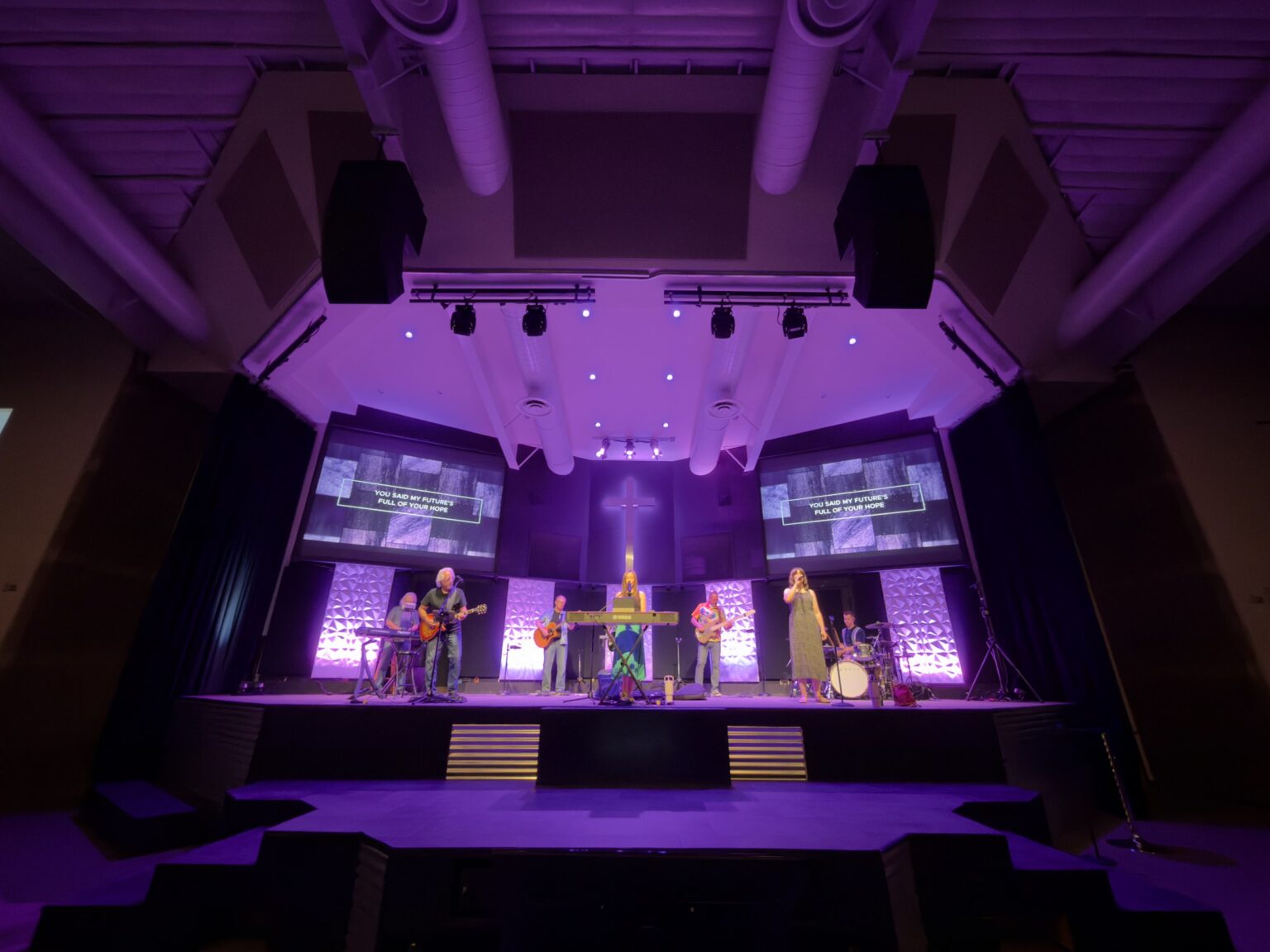
Agoura Bible Fellowship worships under a low, white ceiling. Wash fixtures handle the front light, and uplights wash the walls. Because the ceiling is white and low, that bounce becomes the hair light.
There are no kick lights, which is one less system for the team to own and aim. The LED screens let the stage stay bright without washing out the image. Good lighting design is often about what you can leave out.
More projects
Church lighting we have designed and installed
First Baptist Church Pontotoc
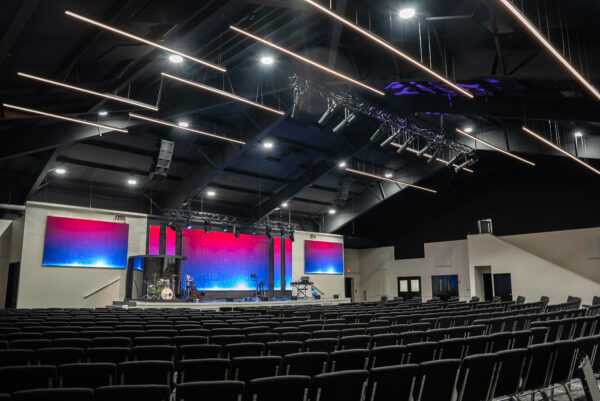
Ten fixtures front-light the stage, with movers on the back truss. Linear house fixtures light the room and double as an architectural element.
Pontotoc, Mississippi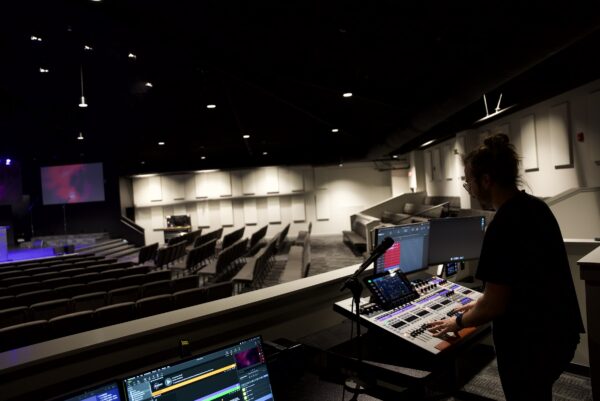
Faith Covenant Church of God
ProPresenter triggers the lighting cues, and a wall panel gives anyone access to the presets without going near a computer.
Scottsboro, Alabama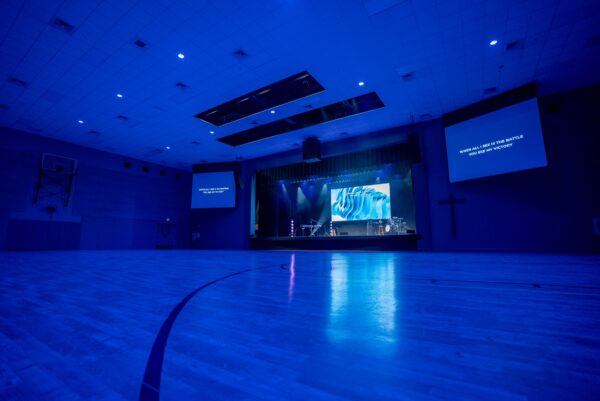
Palm City Presbyterian
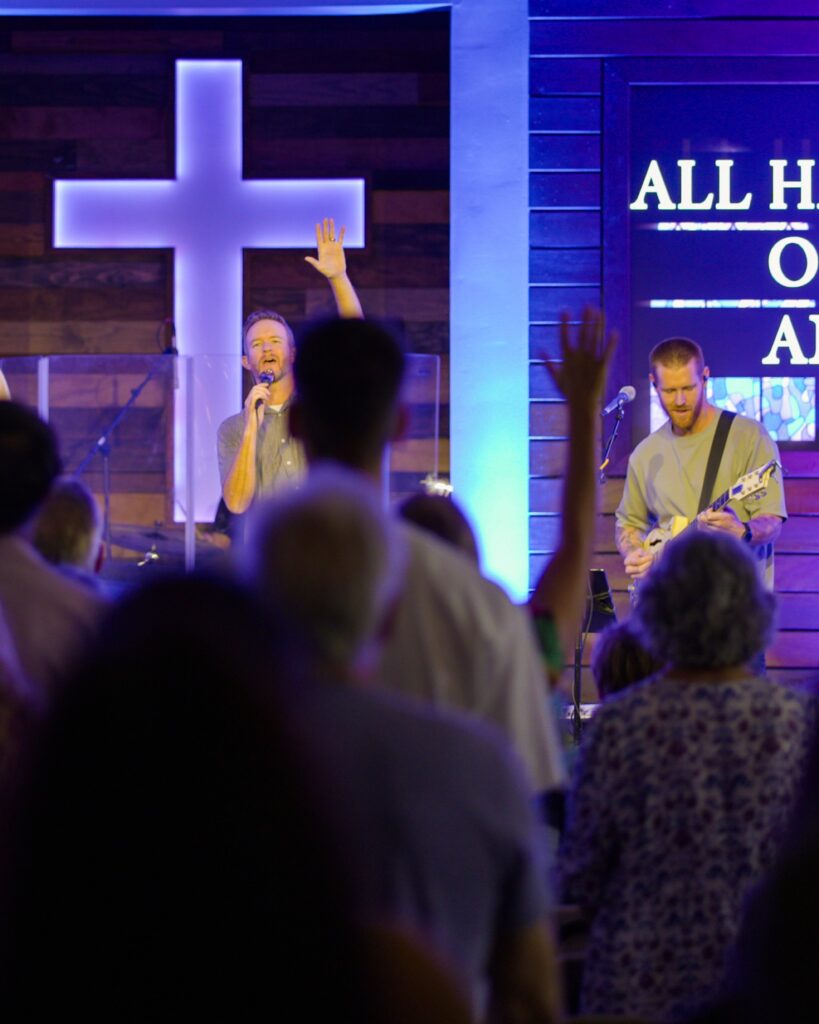
A daylit gymnasium that now lights up for contemporary worship, with stage fixtures, house lighting and an LED wall designed together.
Palm City, FloridaCommon questions
Church lighting questions
How much does church lighting cost?
It depends on the room, how much of the service is streamed and how much infrastructure is already in place. Rigging, power and data often matter as much as the fixtures themselves. Pre-design ends with a Program Report that gives you budget ranges to take to your board, and the fixed price comes after engineering.
What lighting does a church need first?
Front light. Clear, even light on the faces of the people leading and preaching matters more than anything else, in the room and on camera. Back light, wash and effects come after that foundation is right.
Which moving head lights work best for churches?
Many churches do not need moving heads first. They add flexibility and movement, but they cannot fix a stage without good front light. When movers do fit, we choose them for your room size, throw distance and how your team will actually program them.
What lighting do we need for a church livestream?
Cameras need more even front light than the eye, plus enough back light to separate people from the background. The lighting also has to be balanced with your LED wall or screens, so neither washes out on camera.
Can volunteers run our church lighting?
Yes, if it is designed for them. We program looks for your services and store them as presets, triggered from a simple console, ProPresenter or a wall panel. A volunteer can run a Sunday without programming anything.
Can you work with the lighting we already have?
Often, yes. We will tell you honestly which fixtures are worth keeping and which ones will hold the system back, and we plan the infrastructure so you can add more later.
Do you design church lighting outside Florida?
Yes. We are headquartered in Melbourne, Florida and work nationally. Our own crews travel for installation, focus and programming, and travel is scoped and priced in the proposal.
Let’s talk about your lighting.
Tell us about your room, your services and your stream. We will tell you honestly what your lighting needs first, and what can wait. Every project starts with a conversation, not a quote.