
Good church lighting does one thing before anything else: it lets people see the faces of the people leading them. Color, movement and haze can support a moment of worship, but none of it matters if the worship leader and the pastor are standing in shadow.
Most church lighting is bought one fixture at a time, usually starting with the exciting ones. The result is a stage full of color with the most important thing still underlit. This guide lays out the order we use to plan church lighting, so every dollar goes toward what the congregation and the camera actually need.
In this guide
- Lighting has two audiences on Sunday
- Step one: front light
- Step two: back light and separation
- Step three: stage wash and atmosphere
- Step four: house lights
- Step five: control a volunteer can run
- Lighting and your LED wall
- Infrastructure: plan for what comes next
- The manufacturers we specify most
- Common mistakes we see
- How to get started
- Church lighting questions
Lighting has two audiences on Sunday
The first audience is the room. People connect with a leader they can see clearly, and good front light makes expressions readable from the back row.
The second audience is the camera. If your church streams, your online congregation sees the service through a lens, and a camera needs more even light than the human eye. A stage that looks fine in person can look dark, blotchy or washed out on the livestream. Every decision below serves both audiences at once.
Step one: front light
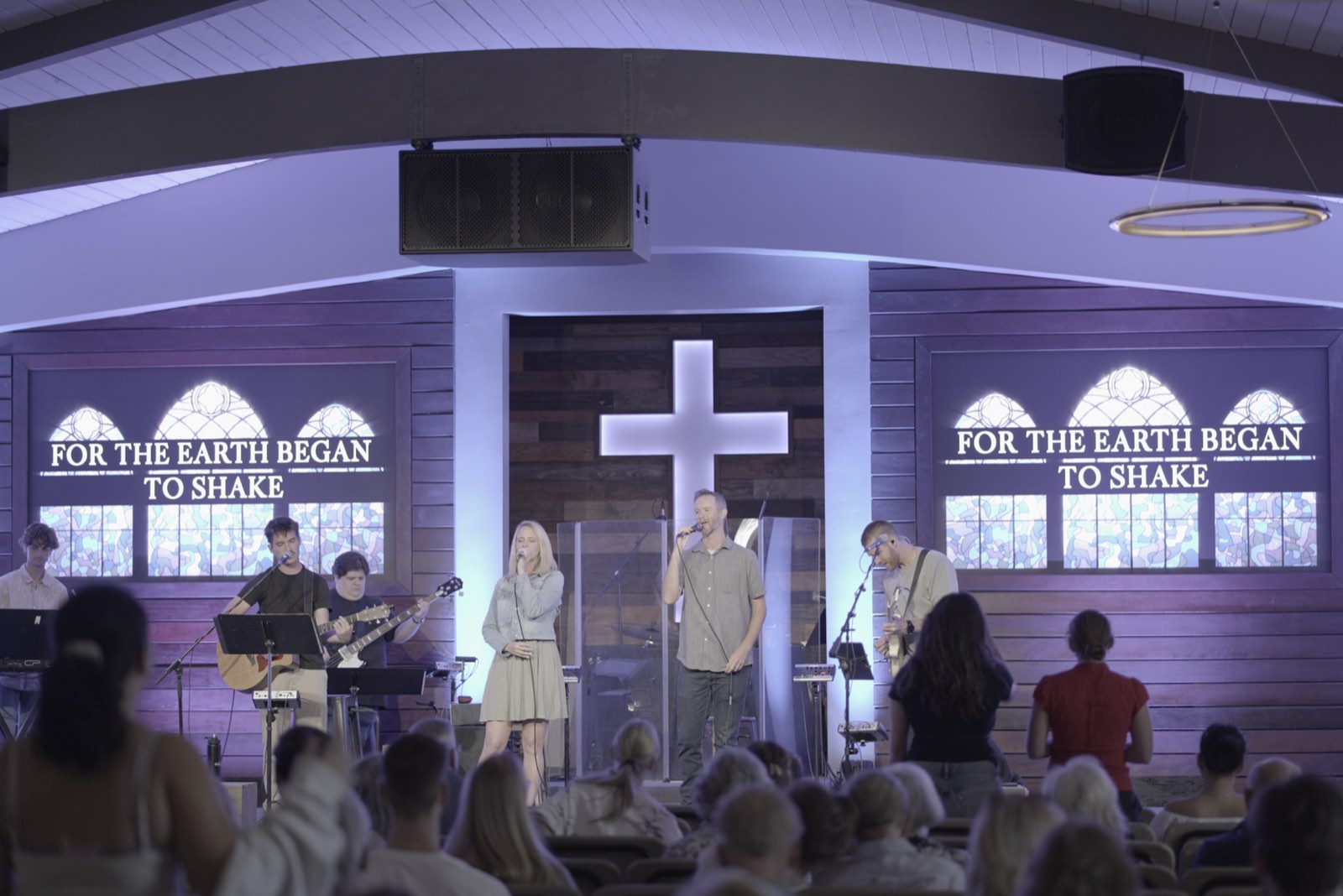
Front light is the foundation of every church lighting system. It is the light on the faces of the people leading and preaching, and it comes first in every design we do.
The angle matters as much as the fixture. Light that comes in too low glares into the eyes of the people on the platform. Light that comes in too steep casts shadows under eyes and noses. The positions are set from the room’s geometry so faces read well from every seat without blinding anyone on stage.
Color consistency matters too. Fixtures bought over several years rarely match, and on camera one person can look warm while the person next to them looks green. We specify front light as a matched set. Pro Church Lights ProSpot fixtures and Chauvet Professional Ovation ellipsoidals handle front light on most of our projects.
Step two: back light and separation
Back light comes from behind and above the people on stage. It outlines their shoulders and hair and separates them from the background, which gives the picture depth. It matters most on camera, where a person without back light can seem to melt into the set.
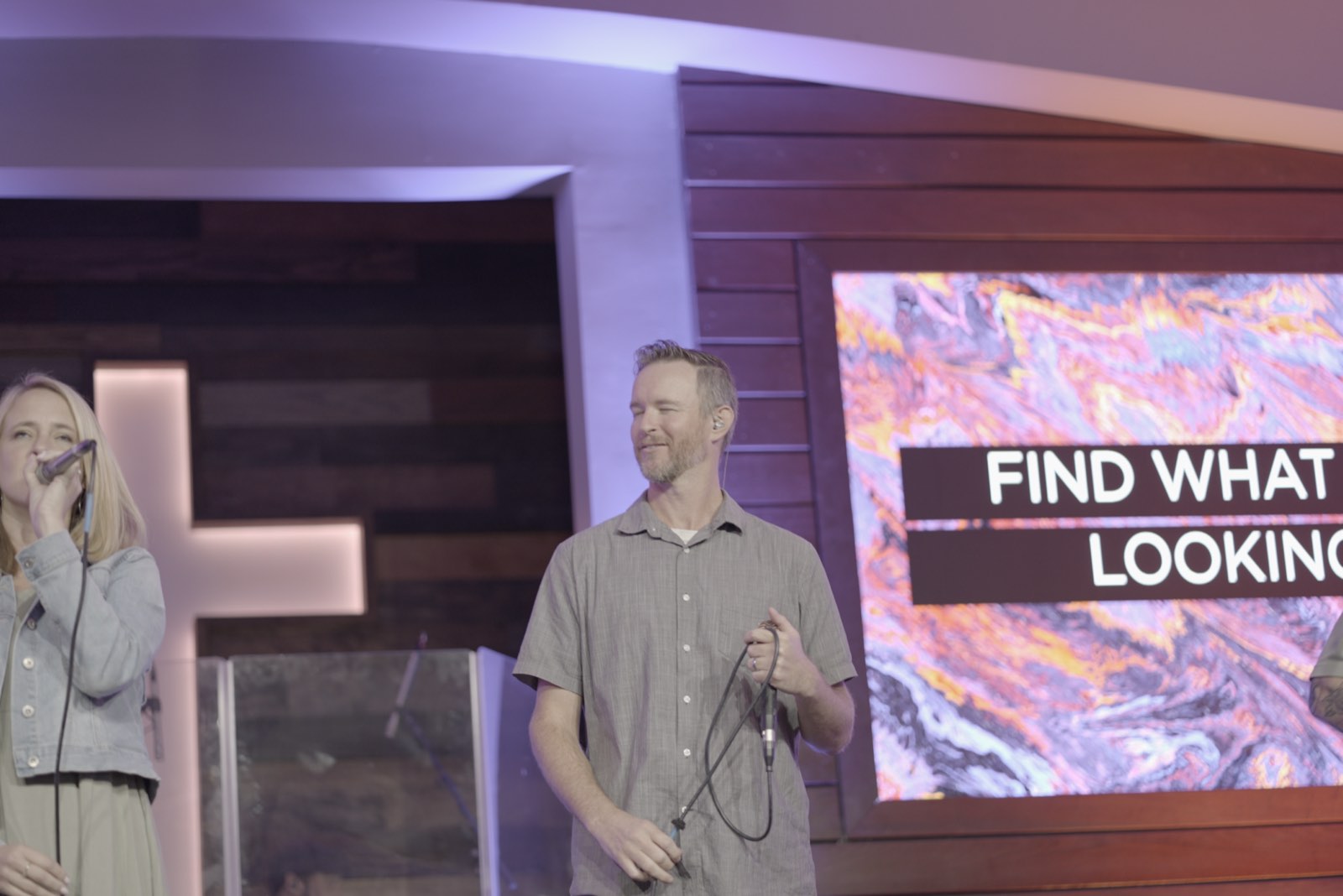
Back light does not always mean a row of dedicated fixtures. At Agoura Bible Fellowship, the ceiling is low and white. Wash fixtures handle the front light, uplights wash the walls, and the bounce off that white ceiling becomes the hair light. There are no kick lights at all, which is one less system for the team to own and aim. Good lighting design is often about what you can leave out.
Step three: stage wash and atmosphere
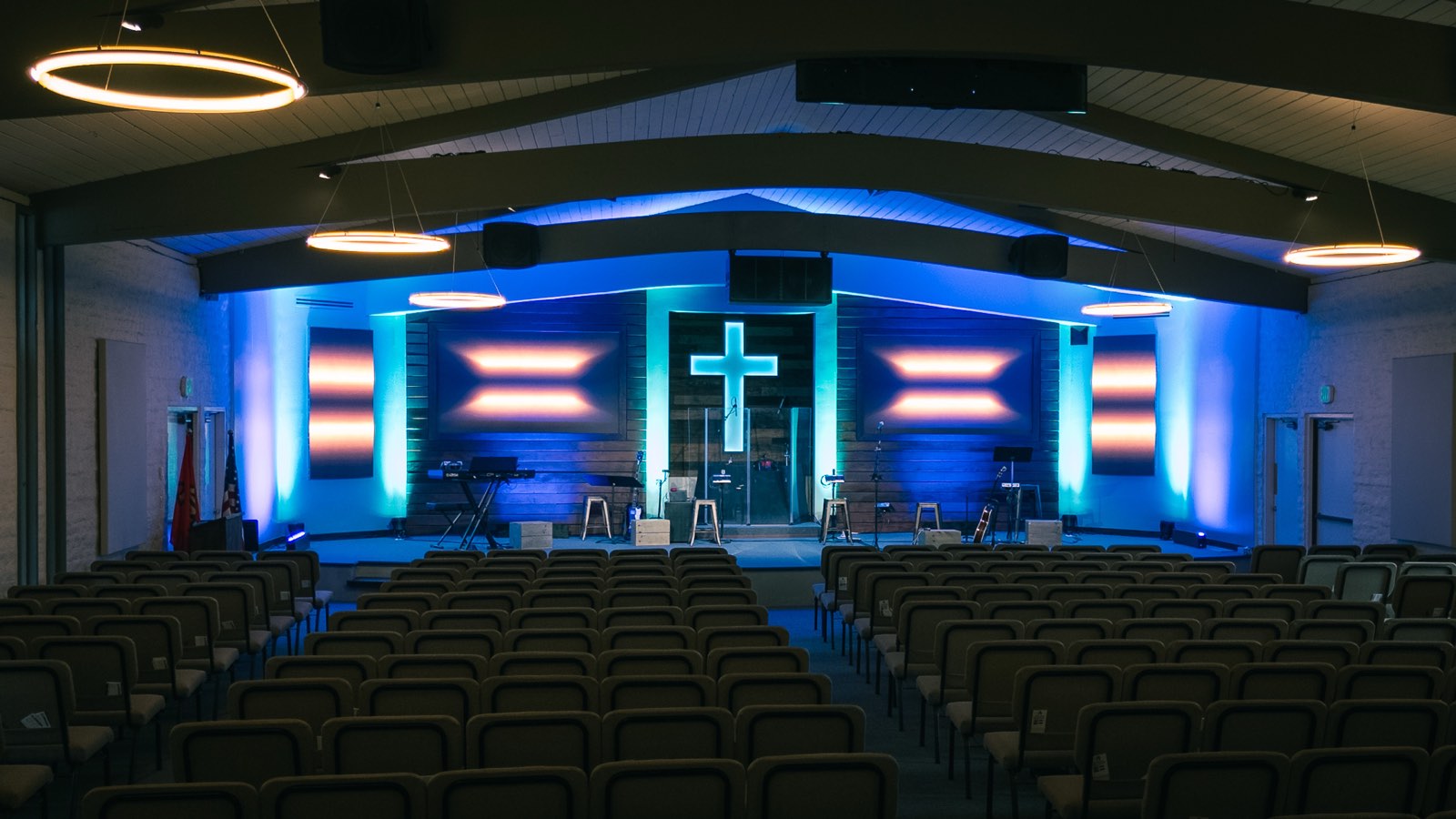
Once faces are lit and separated, color and texture can support the moment. Wash fixtures color the stage and set walls. Battens and bars add lines and depth. Moving heads add flexibility and movement.
Atmosphere should serve worship, not turn the service into a show. We design looks that fit your worship style and your room. For wash and effects we most often use Pro Church Lights ProWash fixtures and Chauvet Professional washes and COLORado battens, adding movers like the Chauvet Rogue and Maverick lines when the room and the team can use them well.
Do you need moving heads?
Many churches do not need moving heads first. They add flexibility, but they cannot fix a stage without good front light, and they take programming time a volunteer team may not have. When movers fit, we choose them for the room size, the throw distance and how your team will actually program them.
What about haze?
Haze makes light beams visible, the way sunlight shows up through clouds. A little haze makes a modest rig look much bigger. It depends on your HVAC and fire alarm system, so it has to be coordinated with the building. We typically specify the Ultratec Radiance, a water-based hazer that suits church environments.
Step four: house lights

House lights are the most overlooked part of church lighting. Many rooms have only two settings: fully on or fully off. Good house lighting dims smoothly for worship, comes up for teaching and announcements, and can even become part of the room’s design.
We use Meteor Lighting fixtures for much of our house and architectural lighting, and ETC dimming and relay panels to control existing house circuits. When house lights can fade with the stage, the whole room feels like one space instead of a lit stage and a dark audience.
Step five: control a volunteer can run
The best lighting system in the world does not help if only one person knows how to run it. We program looks for your services and store them as presets, so every Sunday starts from a known-good state.
Lightkey is the control software on most of our systems. It is powerful for the person who programs and simple for the volunteer who runs it. Presets can also be triggered from ProPresenter, a Stream Deck or a wall panel, so anyone on staff can bring up the right look without touching a computer. Behind the scenes, Obsidian Control Systems Netron nodes distribute the lighting data around the room reliably.
Lighting and your LED wall
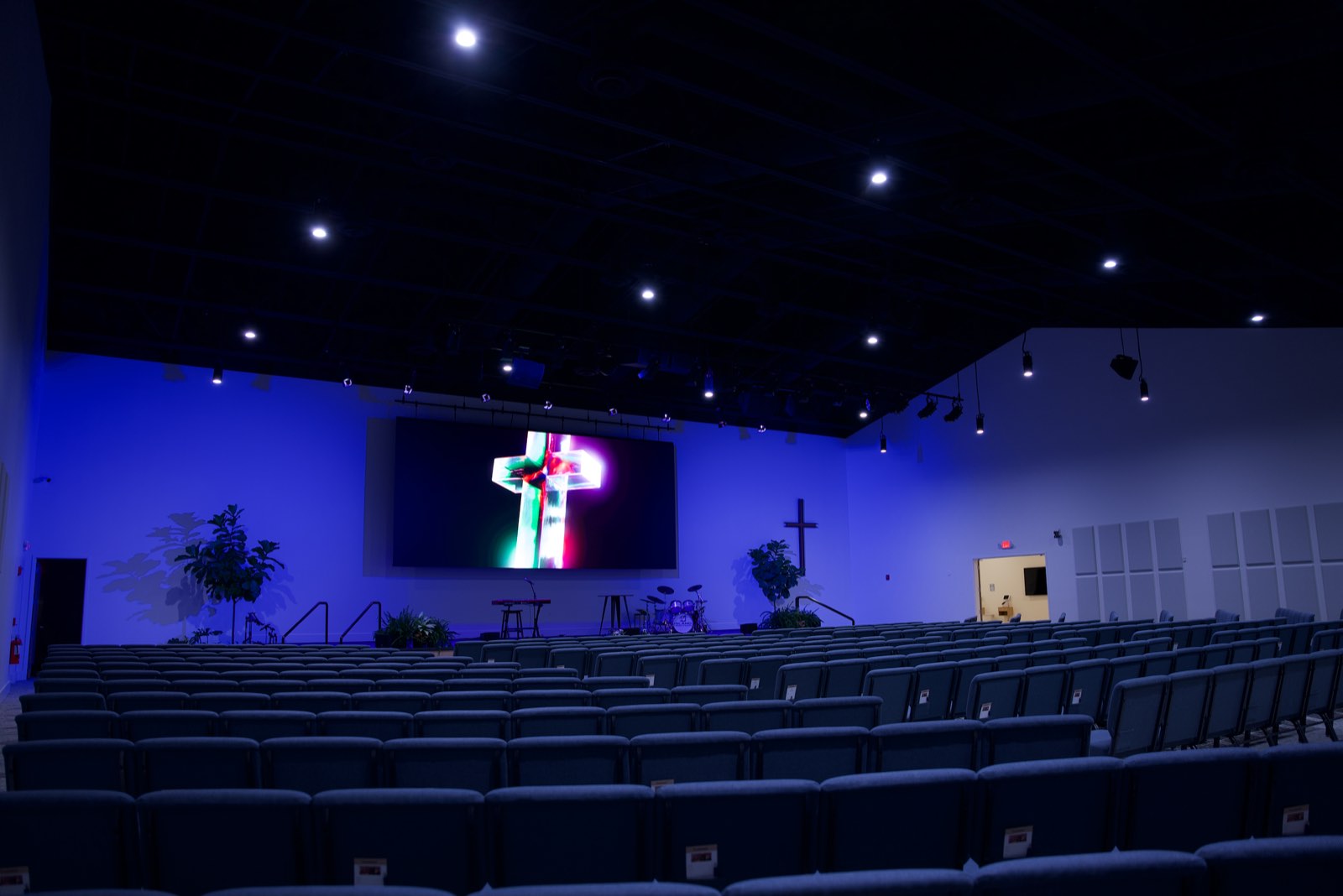
If you have an LED wall, your lighting and your screen have to be balanced together. An LED wall that is too bright makes faces look dark on camera. Front light that is too bright washes out the screen. We coordinate the brightness of both and often build separate looks for in-room and broadcast. See our church LED wall design page for more on how the two work together.
Infrastructure: plan for what comes next
The fixtures get the attention, but the infrastructure decides whether you can grow. Rigging positions, power distribution and data runs are far easier to install once than to add later. We plan the pipe, truss, power and data so a church can add fixtures in future phases without opening walls or overloading circuits.
The manufacturers we specify most
We choose fixtures from the design, but a handful of manufacturers show up across most of our work:
- Front light, wash and blinders: Pro Church Lights, our most frequently specified fixture brand.
- Front light, wash and moving heads: Chauvet Professional.
- House and architectural lighting: Meteor Lighting, with ETC for dimming and relay control.
- Control: Lightkey software, with Obsidian Control Systems Netron nodes for lighting data distribution.
- Haze: Ultratec.
The brand matters less than the order. A church with great front light and a few simple washes will look better, in the room and online, than a church with a dozen movers and dark faces.
Common mistakes we see
- Buying effects before front light.
- Front light at an angle that blinds the people on stage.
- Mixing fixtures that never match in color.
- Lighting for the room and forgetting the camera.
- An LED wall so bright it makes faces look dark.
- Cues so complex that only one volunteer can run them.
- House lights that are only on or off.
How to get started
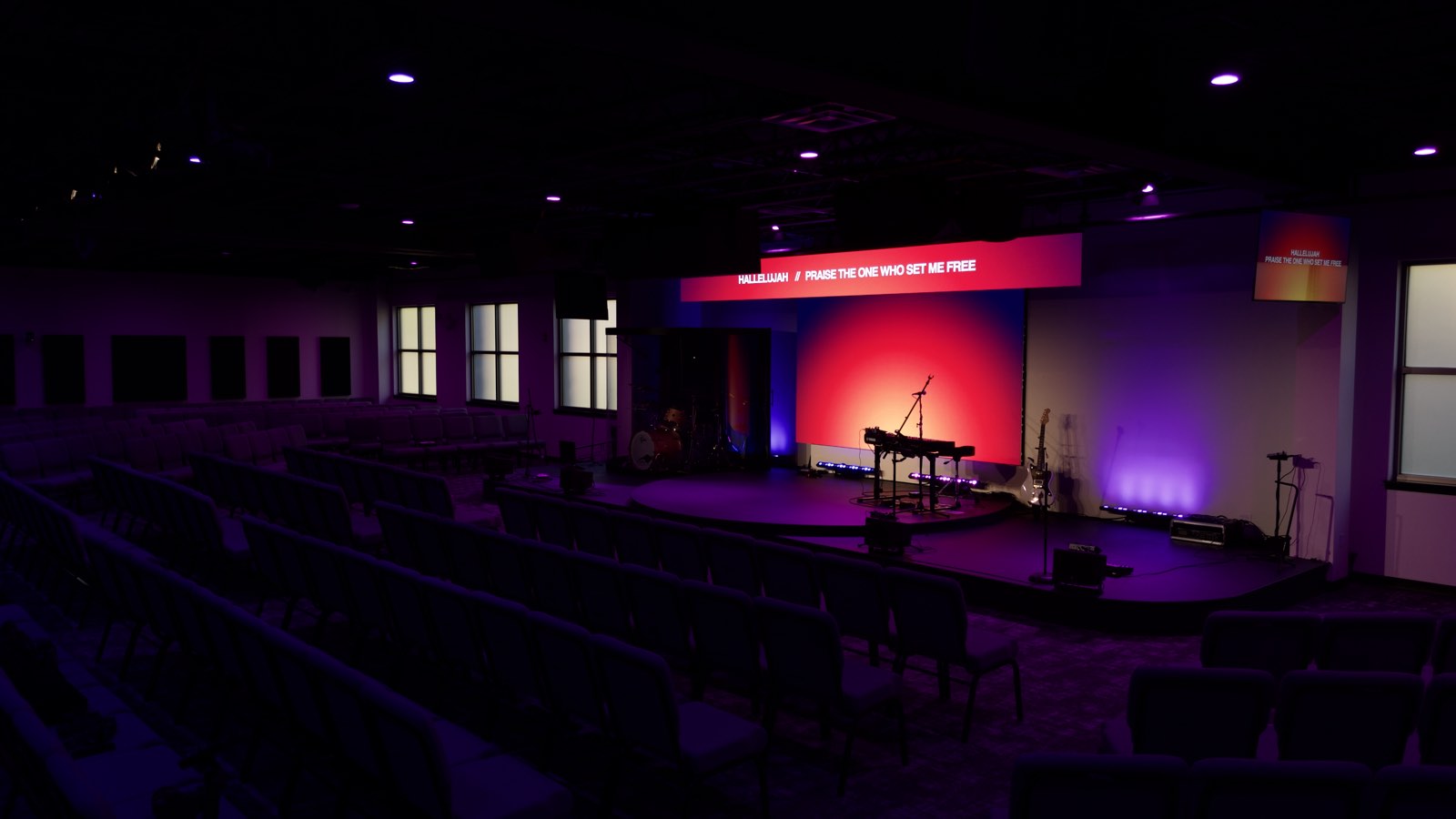
Start by looking at your stage through your livestream camera. Can you see faces clearly? Do people look natural? Does the screen wash anything out? That view tells you where to begin.
When you are ready for help, our team designs and installs stage and house lighting for churches across the country, and we program it so your volunteers can run it. See how we approach church lighting design and installation, or start with a pre-design visit.
Church lighting questions
What lighting does a church need first?
Front light. Clear, even light on the faces of the people leading and preaching matters more than anything else, in the room and on camera. Back light, wash and effects come after that foundation is right.
What lighting do we need for a church livestream?
Cameras need more even front light than the eye, plus enough back light to separate people from the background. The lighting also has to be balanced with your LED wall or screens so neither washes out on camera.
How much does church lighting cost?
It depends on the room, how much of the service is streamed and how much infrastructure is already in place. Rigging, power and data often matter as much as the fixtures. A good design phase gives you budget ranges before you commit.
Can volunteers run our church lighting?
Yes, if it is designed for them. Looks programmed as presets and triggered from simple software, ProPresenter or a wall panel mean a volunteer can run a Sunday without programming anything.
Can we keep the lighting we already have?
Often, yes. An honest evaluation should tell you which fixtures are worth keeping, which will hold the system back, and how to plan the infrastructure so you can add more later.