
When a church starts planning an AV upgrade, it’s easy to focus on the most obvious pain point.
The speakers sound muddy.
The projector is hard to see.
The lighting controller is confusing.
The tech booth is cluttered.
But most churches don’t just need one new piece of gear. They need a system that supports the way the room is actually used.
That was the case at Thunderbird Seventh-day Adventist Church in Scottsdale, Arizona. This room serves the church, but it also supports a school, chapel services, special events, teachers, coaches, guest presenters, and volunteers with different levels of technical experience.
So the goal was not simply to install better equipment. The goal was to make the room clearer, cleaner, more flexible, and easier to run.
Start with clarity, not volume
One of the biggest upgrades in this room was the PA system.
Before the project, the church was using a DIY speaker setup that lacked clarity. The issue was not just loudness. The room needed clear, intelligible speech and full, balanced music coverage for worship, school events, and spoken-word moments.
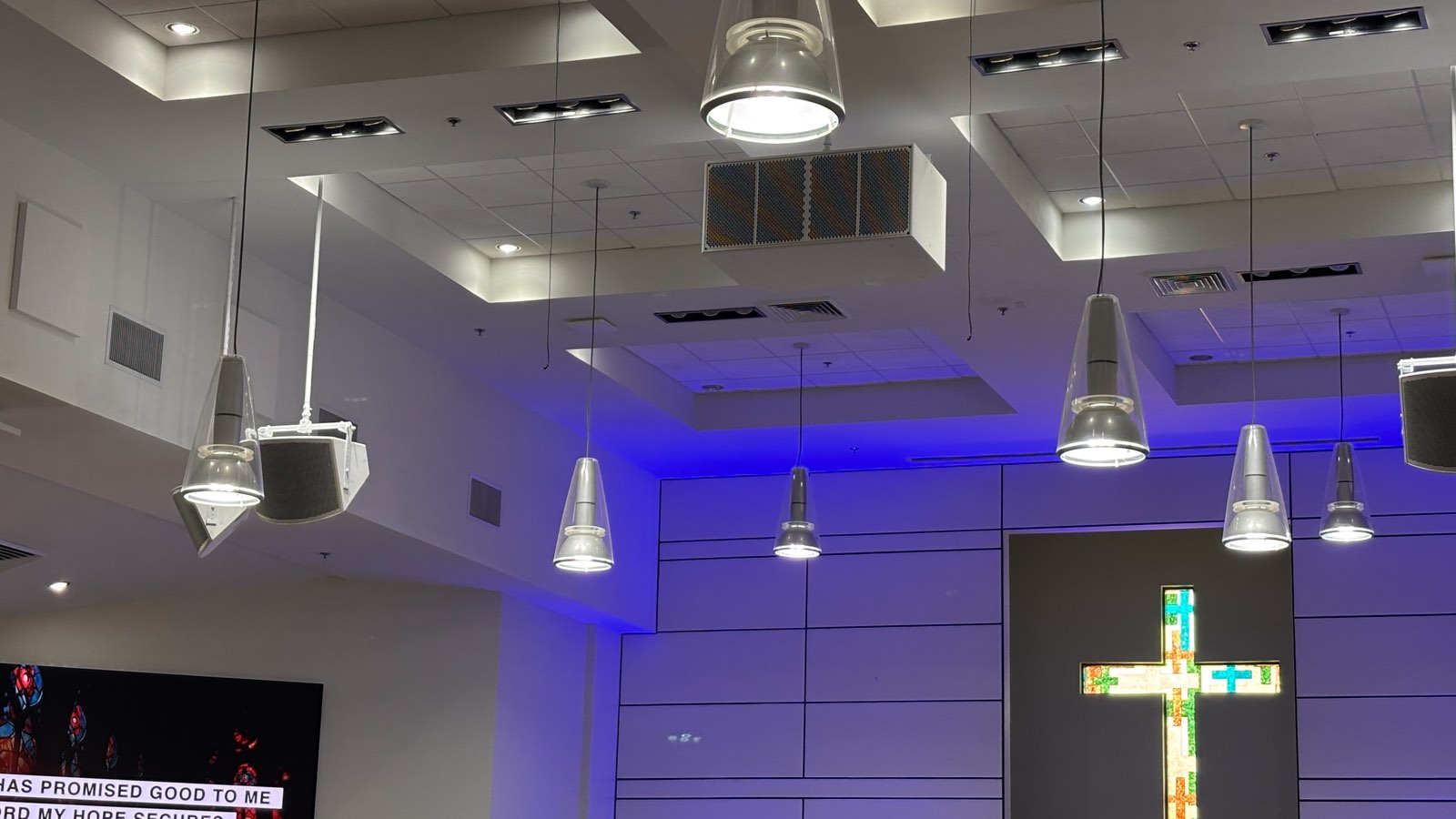
For the main PA, the team designed a Fulcrum Acoustic system with CCX1595 mains, CCX1277 outfills, and a flown dual 18-inch subwoofer in the center of the room. The result is a system that feels full without being harsh or overwhelming.
But the speakers were only part of the solution.
A great PA in a reflective room can still produce poor results. This room had hard parallel surfaces, drywall, and very little acoustic treatment. Without treating the room, the church would have ended up with a louder version of the same problem: reflections, echo, and reduced intelligibility.
So the system included acoustic treatment as part of the design. Primacoustic Broadway panels were added on the back wall and side walls, along with Nimbus clouds suspended from the ceiling. The goal was not to make the room feel dead or studio-like. The goal was to reduce distracting reflections while preserving the natural life of congregational singing.
That’s an important distinction for churches.
Good acoustics are not about removing energy from the room. They’re about helping people hear clearly.
Build systems volunteers can actually use
Thunderbird SDA also needed a better monitoring setup.
Previously, the church relied heavily on floor wedges. That created more stage volume, made the room harder to control, and left musicians using older monitors that were beginning to sound tired.
The new system uses a hybrid approach: Behringer P16 personal mixers for static musician positions like piano, cajon, and guitar, plus Shure PSM 300 wireless in-ear monitoring for vocalists. That gives the team better control, less stage volume, and a cleaner experience for musicians.
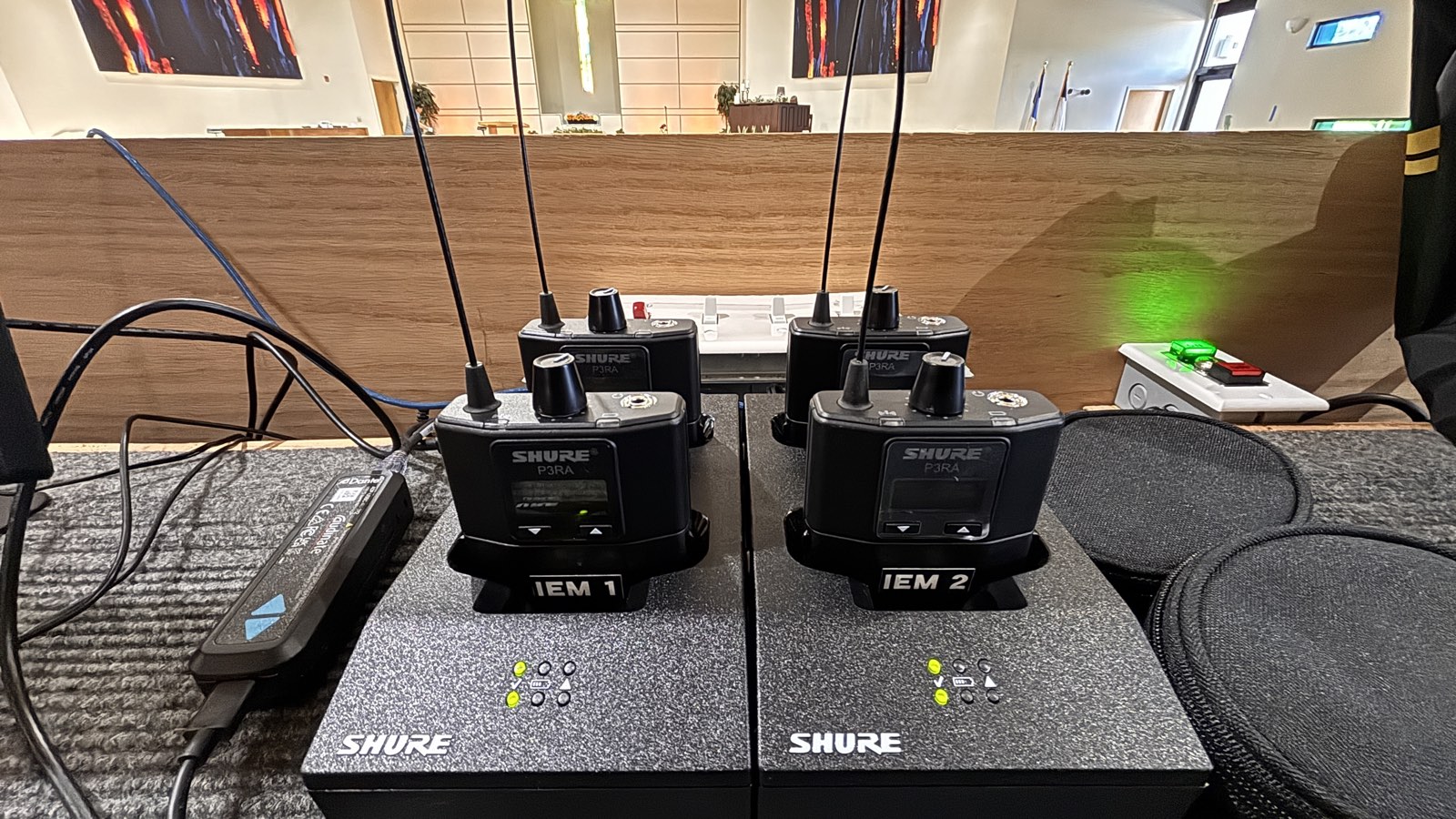
The audio console was an existing full-size Midas M32, so the team added a Dante card to bring the console into the broader networked audio system. M32 Edit was deployed at the audio director position, making it easier to name channels, color-code inputs, organize the show file, and make adjustments from a computer instead of doing everything from the board.
They also set up Shure Wireless Workbench for both new Shure gear and legacy wireless equipment. That allows the team to coordinate frequencies, monitor battery health, check RF strength, and manage wireless systems from the tech booth.
This is where a professional system starts to feel different.
It’s not just that the gear is better. It’s that the system gives volunteers the right tools in the right place.
Make the room work for more than Sunday morning
Because this space is used by a church and a school, simplicity mattered as much as capability.
One example is the Dante AVIO USB-C adapter. It gives teachers, presenters, or event leaders a simple way to plug in a phone or laptop and send two channels of audio into the system. They don’t need to understand the entire console. They don’t need to route audio through a complicated patch. They can plug in and play walk-in music, walk-out music, or a presentation track.
The same thinking shaped the lighting system.
The old lighting controller was replaced with Lightkey. The team created simple lighting scenes for walk-in, worship, prayer, and sermon moments. They also built ProPresenter macros that trigger Lightkey scenes from specific slides, which means one person can run slides and lighting together.
That matters for churches that do not have unlimited volunteers.
A system that technically works but requires three trained operators every week may not actually serve the church well. In this case, the setup was designed so one volunteer can do more with confidence.
Clean infrastructure creates long-term flexibility
The video system followed the same principle.
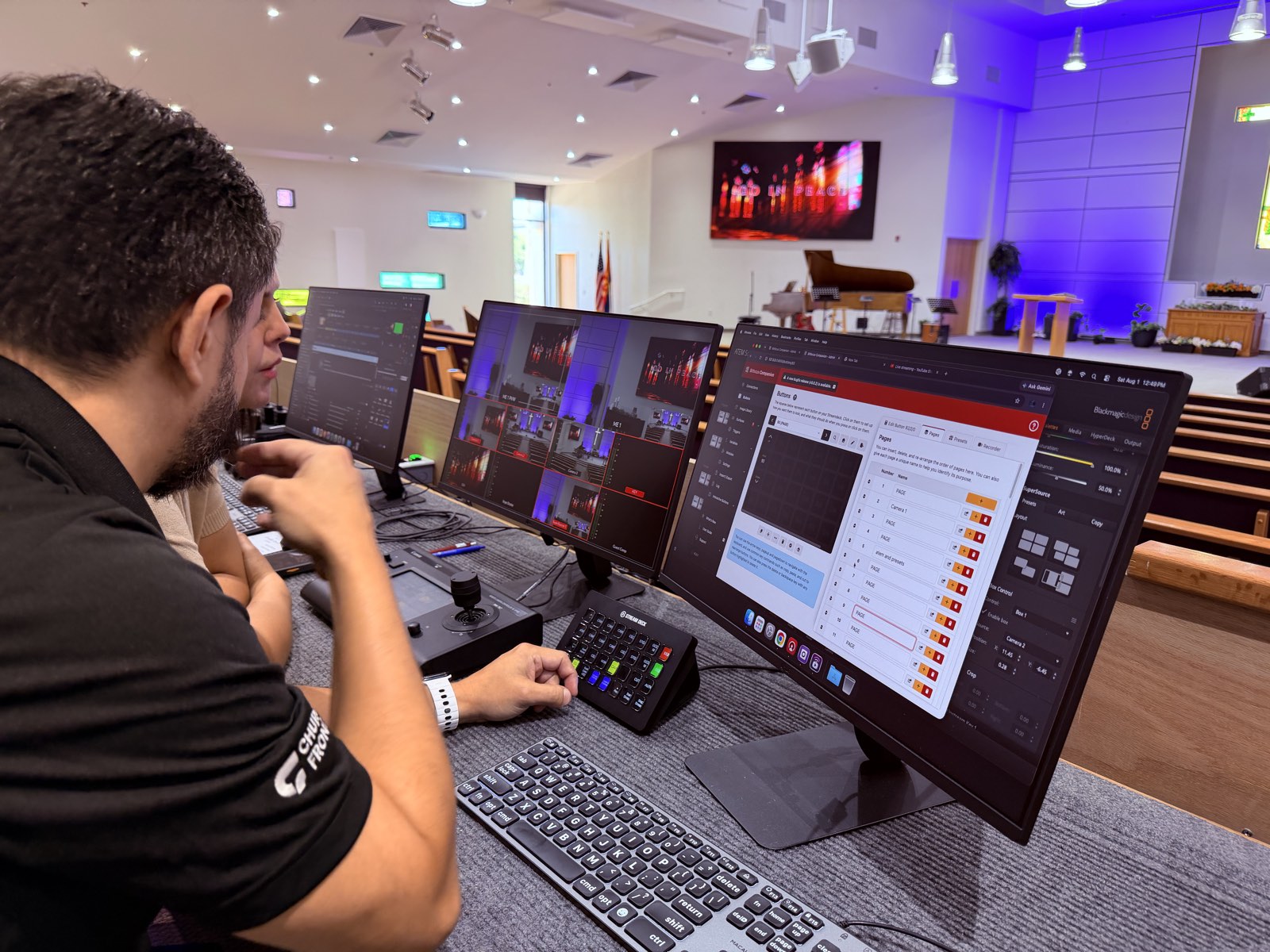
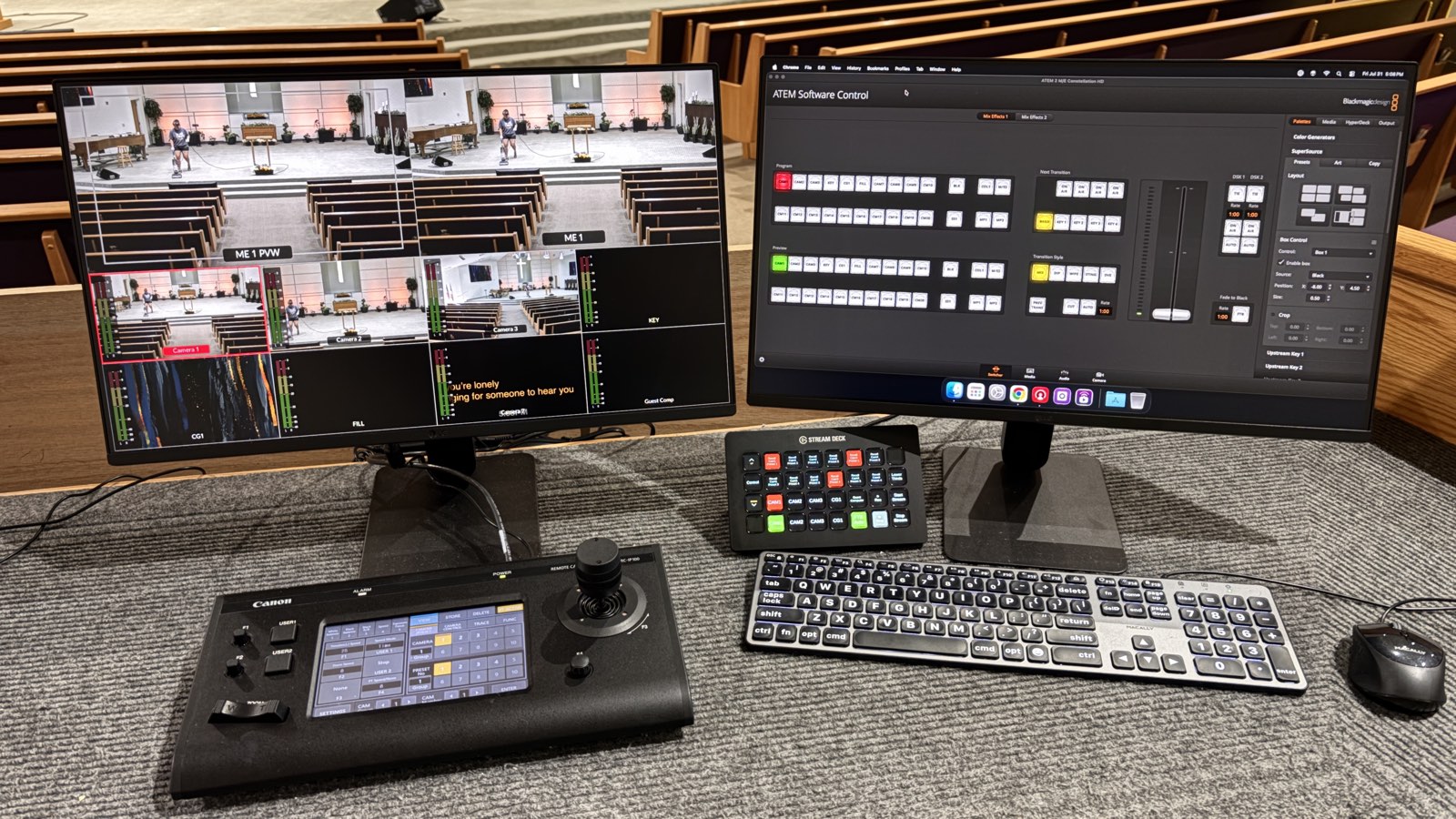
Thunderbird SDA had a mix of older cameras and PTZ heads that cluttered the video area. The new design uses Canon CR-N500 cameras with a Canon RC-IP100 controller, feeding a Blackmagic ATEM 2 M/E Constellation 4K. Bitfocus Companion and Stream Deck control make it possible to switch cameras, trigger macros, start recording, start streaming, manage SuperSource, and change display routing from one simple interface.
Behind the scenes, the infrastructure is what makes that simplicity possible.
At front of house, the racks include network patch bays, assigned VLANs, AV Access KVMs, three M4 Mac minis, a Sonnet RackMac mini enclosure, a DeckLink Duo 2 in an Echo III expansion chassis, battery backup, Blackmagic encoding and recording hardware, and a video patch bay.

That may sound technical, but the practical benefit is simple: the workstations stay clean, the computers stay protected in the rack, the adapters do not get bumped, and the system is easier to maintain.
In the back rack, the AV network, Q-SYS Core, LED processors, DMX distribution, wireless microphone receivers, in-ear monitor transmitters, P16 distribution, DL32 stage box, amplifiers, and power sequencing all work together as one system.
That is what gives the church flexibility.
They can route cameras, stage inputs, guest computers, LED screens, confidence displays, audio channels, and control signals without rebuilding the system every time the room is used differently.
Choose displays that fit the room
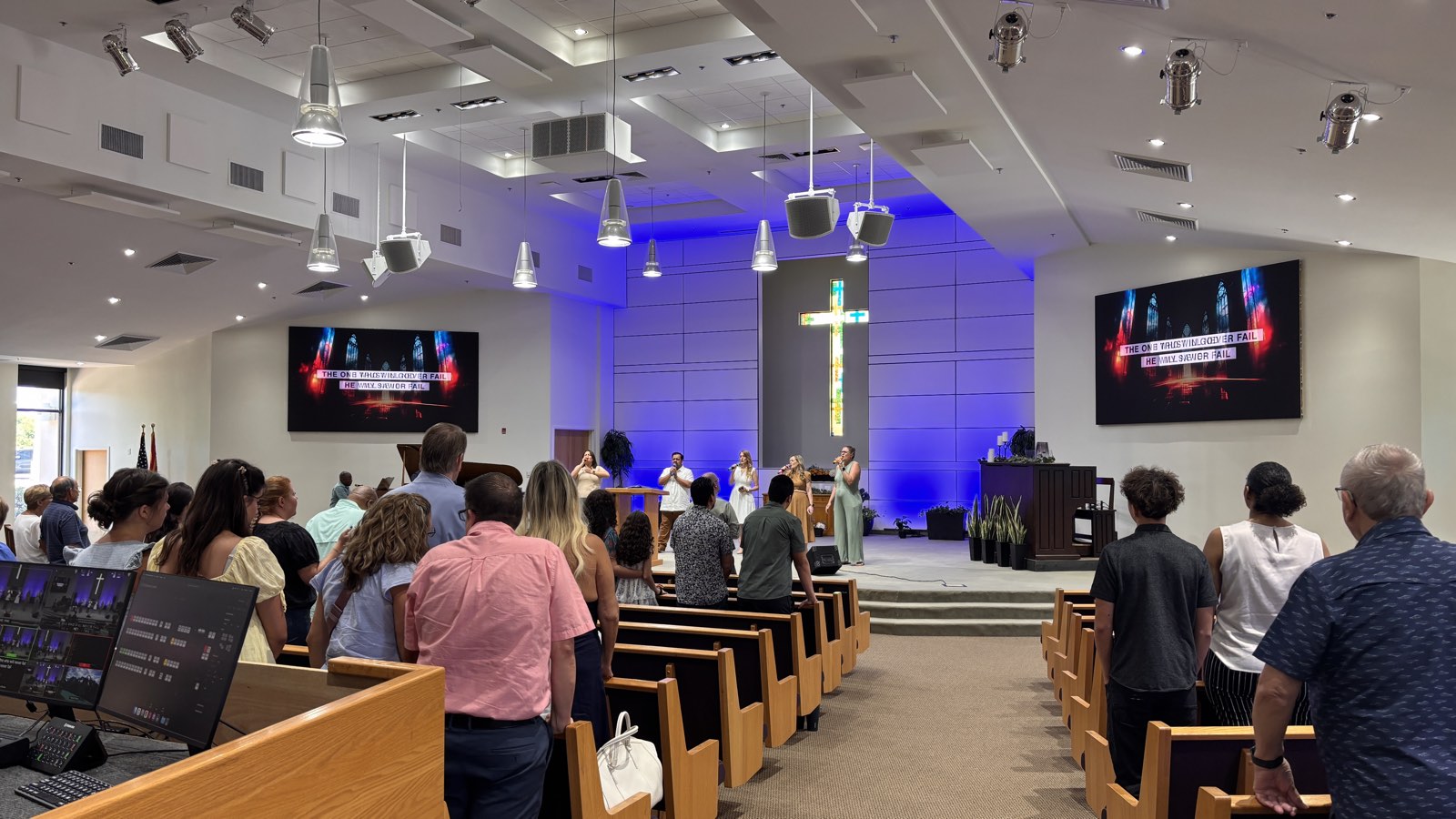
One of the most visible changes in the room was replacing the old center projection setup with LED screens.
Previously, the projection screen dropped in the center of the room and covered a beautiful stained glass cross. The church wanted to improve visibility without losing that important visual element in the worship space.
LED made sense for a few reasons.
The room has a lot of ambient light from windows and doors. That made projection harder to see. The side walls also created a natural location for displays that preserved the cross, improved sightlines, and served the wider seating areas.
The team installed Altitude LED screens with a 2.6 millimeter pixel pitch, sized around 6.5 by 11.5 feet. The screens can show lyrics, graphics, video content, or camera feeds. They can also support image magnification for moments like baptisms, helping people in the wings and rear seats see what is happening clearly.
That is a ministry outcome, not just a technology upgrade.
The display system helps the room communicate better.
Plan for the future, not just the install day
The team also refreshed the wall panels with new XLR, data, video, SDI, and DMX connections. Even though the building is only about 16 years old, technology changes quickly. Updating the connection points gives the church more flexibility for instruments, cameras, lighting fixtures, and future needs.
The Q-SYS touchscreen is another example of planning beyond Sunday morning.
Teachers, coaches, and small group leaders can walk into the room and control basic microphone channels, music playback, master volume, mute buttons, and eventually lighting presets without interacting with the main tech booth. That makes the room less intimidating for non-technical users.
And because Thunderbird SDA is enrolled in Churchfront Pro, the system can continue to evolve as the school year begins and new needs become clear. The church has ongoing access to Churchfront’s team for coaching, troubleshooting, roadmapping, and support.
That is the real value of an integrated approach.
The project is not just equipment in a rack. It is a system designed around people: volunteers, pastors, teachers, students, musicians, and guests.
If your church is starting an upgrade, replacing one component, or trying to decide what should happen next, start with the bigger question:
What does this room need to help people lead, worship, teach, and gather with confidence?
If you’re not sure where to begin, reach out to the Churchfront team at https://churchfront.com/apply/. We’ll help you understand the season your church is in and build a practical next-step plan for your audio, video, lighting, and systems needs.